Following Jesus is not a hobby, an add‑on, or a weekend interest. It is a total reorientation of life—a surrender so deep that Jesus Himself warns us to count the cost before we begin.
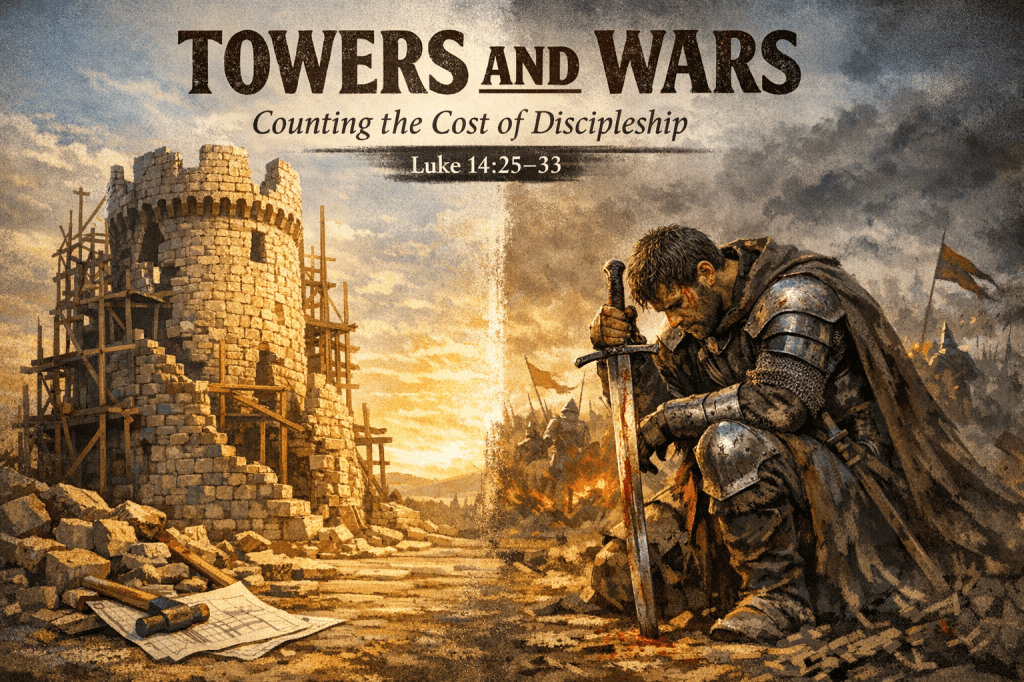
In Luke 14:25–33, Jesus gives two vivid parables to help us understand what true discipleship requires: the parable of the unfinished tower and the parable of the outnumbered king.
Both images point to the same truth:
You cannot finish the tower or win the war in your own strength.
But with Christ, the victory is certain.
1. The Unfinished Tower: A Picture of Human Inadequacy

Imagine standing before the magnificent Neuschwanstein Castle in Germany. Its towers and turrets rise like something from a fairy tale – literally. Yet the castle was never fully completed during the lifetime of the owner. King Ludwig II poured his fortune, energy, and imagination into it—but the project outgrew his resources, his strength, and even his life. Today it stands as a monument to beauty—and uncompleted human desire.
The King’s intent was to build a retreat for himself and his friends – the public were never to have access. Ironically, since that day, the public are the only ones to walk its magnificent halls, and view its grandeur!
Jesus uses a similar image:
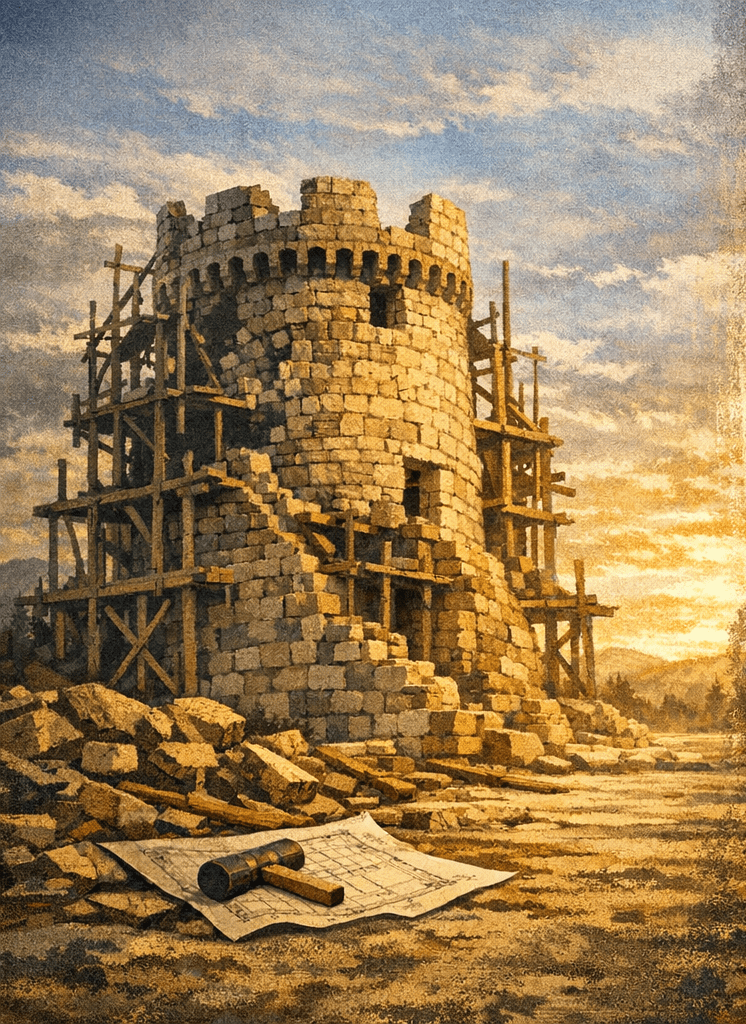
“Which of you, desiring to build a tower, does not first sit down and count the cost… lest after he has laid the foundation and is not able to finish, all who see it begin to mock him?” Luke 14:28–30
Jesus is not giving construction advice. He is asking a spiritual question:
Are you prepared to follow Me all the way—not halfway, not until it gets hard, but to the end?
And He is giving a spiritual warning:
Anything you try to build in your own strength will remain unfinished.
Scripture reinforces this truth:
- “Unless the LORD builds the house, they labour in vain who build it.” (Psalm 127:1)
- “Trust in the LORD with all your heart… and He shall direct your paths.” (Proverbs 3:5–6)
There is another tower in Scripture that was never completed—the Tower of Babel (Genesis 11:1–9). It failed not because of poor planning but because of ungodly intent. They built for their own name, not God’s. They trusted their own strength and ingenuity. God frustrated their plans.
The lesson is timeless: Whose kingdom are you building—yours or God’s?
2. The Context: Radical, Uncompromising Surrender
These parables come immediately after two of Jesus’ hardest statements:
- “If anyone comes to Me and does not hate his own father and mother… he cannot be My disciple.” (Luke 14:26)
- “Whoever does not bear his own cross… cannot be My disciple.” (Luke 14:27)
Jesus is not commanding rejection of family—He is demanding priority.
He is not calling for martyrdom—He is calling for surrender.
The question is piercing:
What are you clinging to that keeps you from following Christ fully?
3. The Tower: Whose Strength Are You Relying On?
Throughout Scripture, towers symbolize strength and security.
- God is called “our strong tower” (Proverbs 18:10).
- Cities built towers for defense (Judges 9:51).
- But Babel stands as the greatest example of an unfinished tower – exemplifying human pride and ambition (Genesis 11:1–9).
Jesus’ point is not “try harder.”
His point is: You cannot finish what you start without Me.
Better to build on the Rock (Matthew 7:24–25).
Better to let God be the builder (Psalm 127:1).
Better to surrender the project than to attempt it alone.
4. The War: A Battle You Cannot Win Alone
Jesus’ second parable shifts from construction to combat:
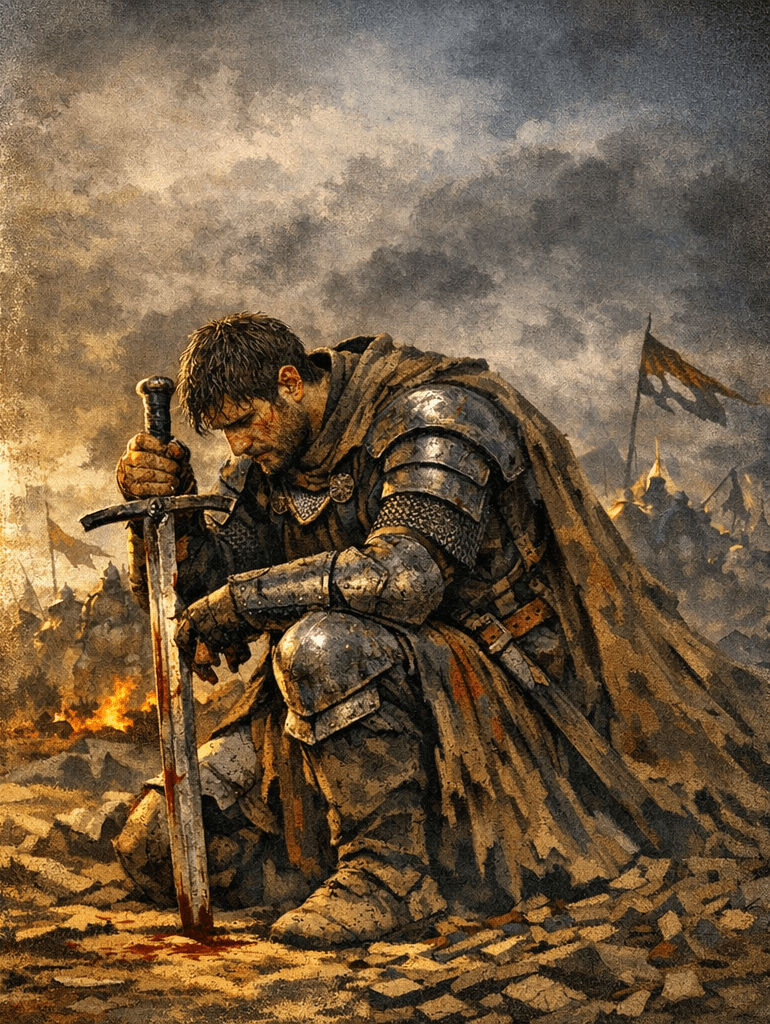
“What king, going out to encounter another king in war, will not sit down first and deliberate whether he is able with ten thousand to meet him who comes against him with twenty thousand?” Luke 14:31
The numbers are symbolic:
- 10,000 = our strength
- 20,000 = God’s strength (Psalm 68:17 speaks of “twenty thousand, even thousands of angels”)
Jesus is not teaching military strategy.
He is teaching spiritual reality:
You cannot win the war against sin, flesh, or death on your own.
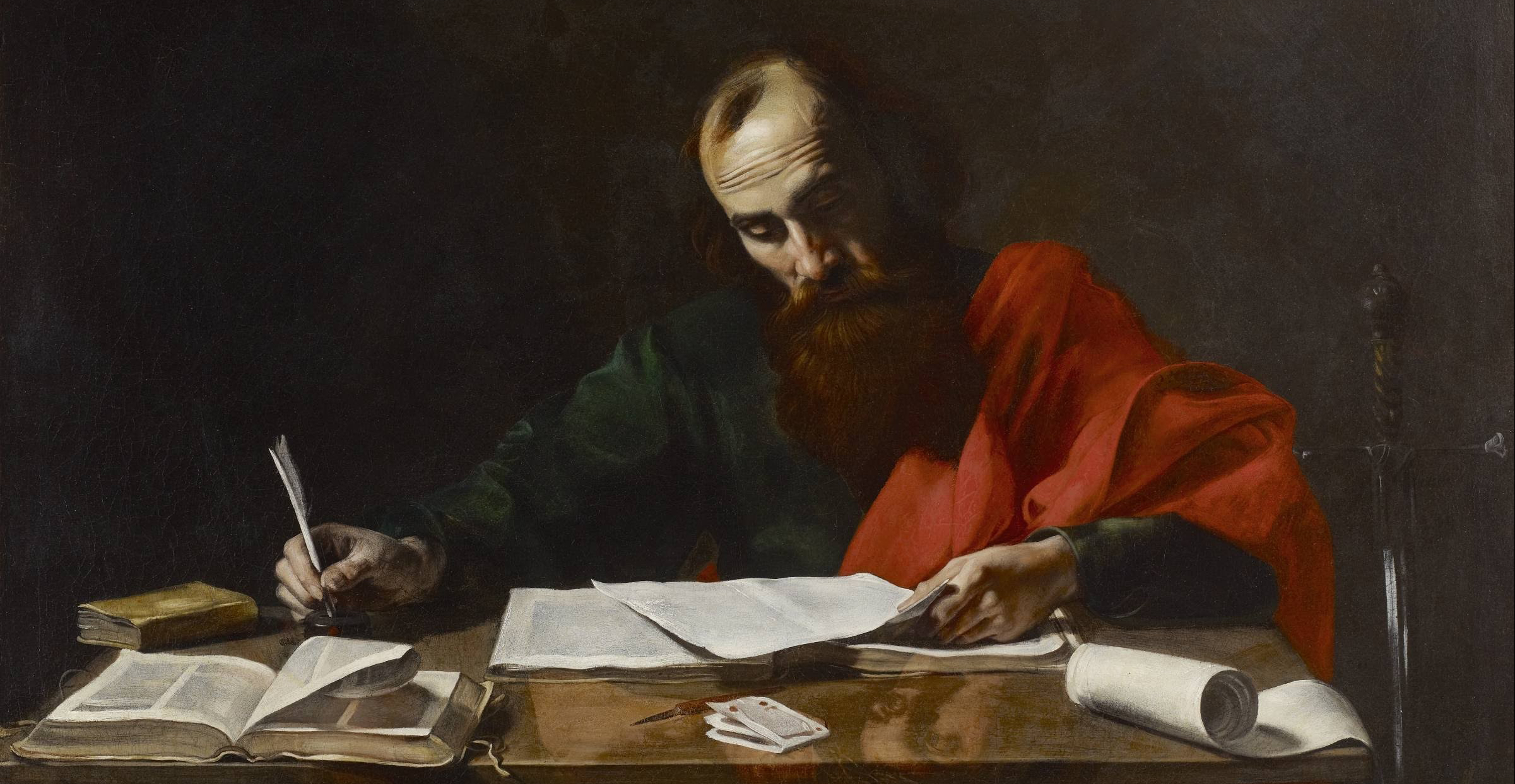
Paul cries out: “Who will deliver me from this body of death?” (Romans 7:24)
Not self‑effort.
Not willpower.
Not moral determination.
Only Christ.
Romans 8:5–9 explains that the flesh cannot defeat the flesh.
Only the Spirit brings victory and peace (Romans 8:6).
So what does the weaker king do?
He seeks terms of peace.
This is not peace with sin—sin must be crucified, not negotiated with (Romans 6:6).
This is peace with God (Romans 5:1).
The message is clear: You cannot win on your own—so surrender to God.
5. The Heart of the Passage: Total Surrender
Jesus concludes: “Any one of you who does not renounce all that he has cannot be My disciple.” Luke 14:33
This does not mean:
- “Give away everything” (though Jesus required that of the rich young ruler).
- “Live in poverty” (though some disciples do).
It means: Hold nothing back.
Your plans. Your ambitions. Your identity.
Your tower.
Your war.
Everything must be placed in His hands.
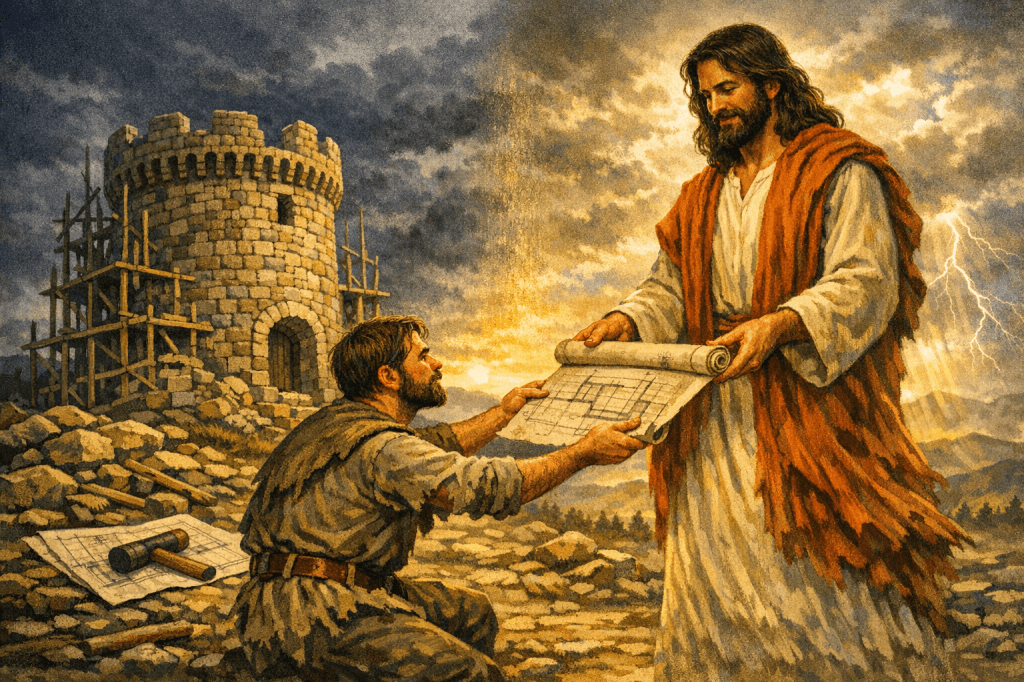
Because:
- You cannot finish the tower alone.
- You cannot win the war alone.
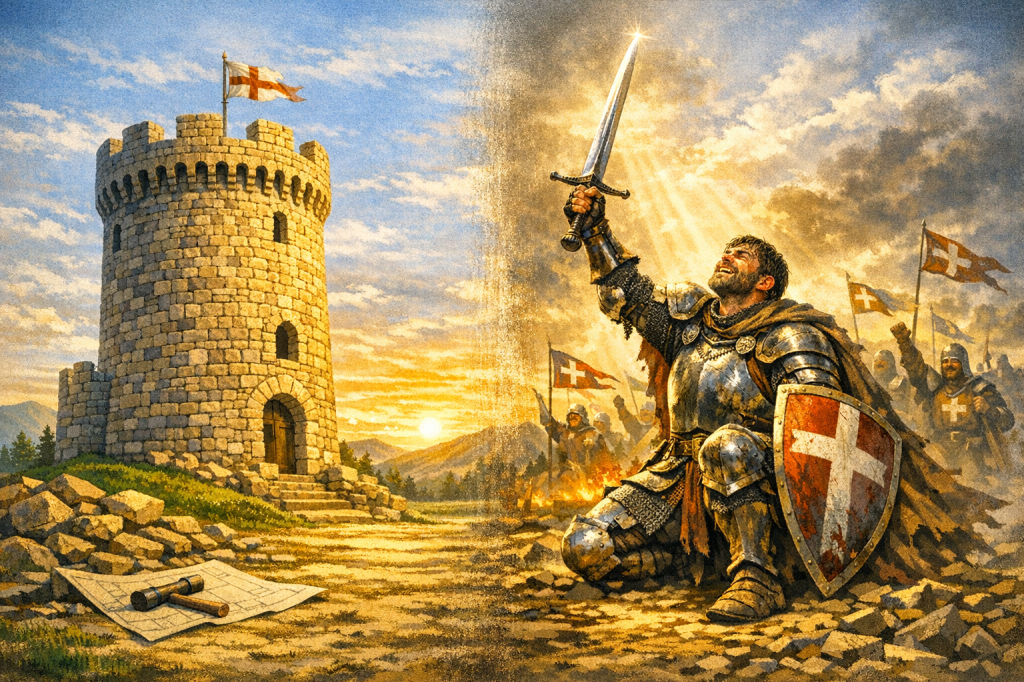
- But with Jesus, the victory is certain.
6. The Gospel in the Parables: His Sufficiency, Not Ours
These parables are not about:
- self‑reliance
- self‑confidence
- self‑determination
They are about self‑sacrifice.
They are not about calculating whether discipleship is worth it—of course it is worth it!
They are not about whether or not you can finish the tower, because you can’t on your own!
They are not about whether or not you can win the war, because you can’t on your own!
They are about recognizing:
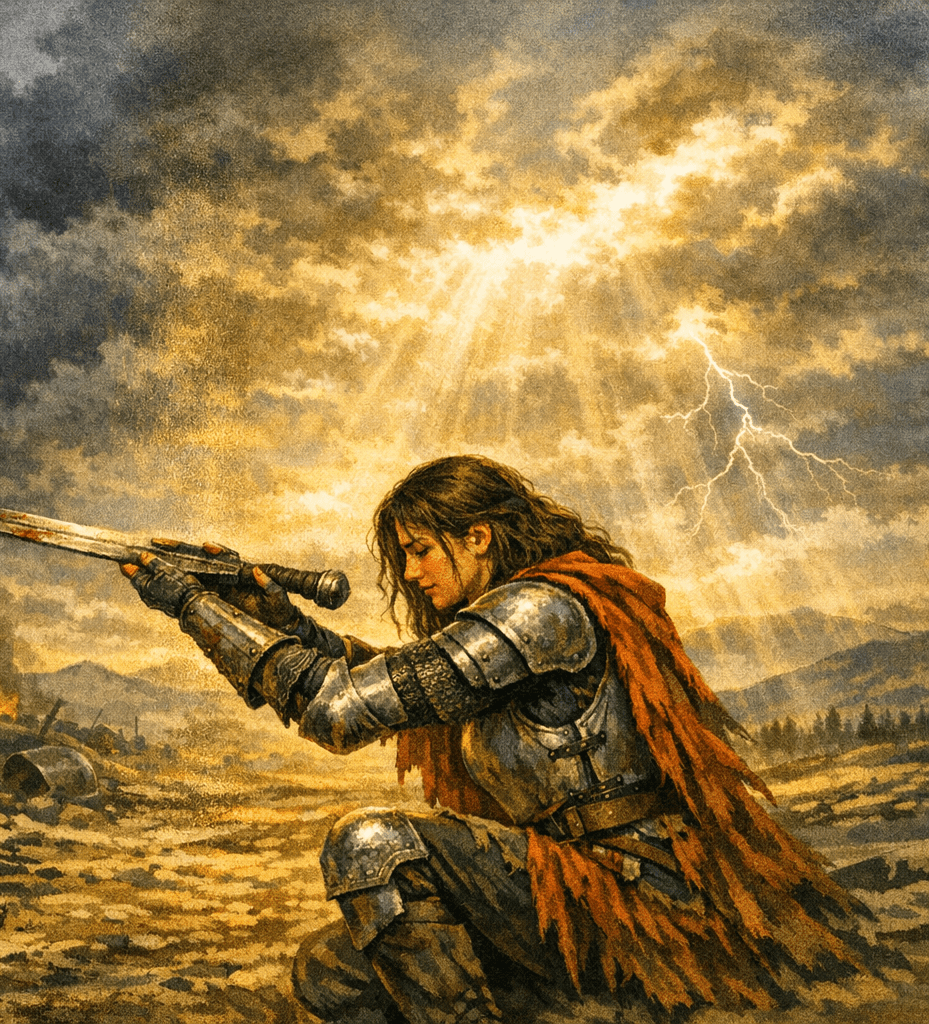
- Your tower is not worth building without Christ.
- Your war is hopeless without Christ as your Captain.
- Your strength is insufficient—but His is enough.
Paul gives us the promise that ties it all together:
“He who began a good work in you will bring it to completion.” Philippians 1:6
Christ finishes what He starts.
Christ wins the battles you cannot.
Christ builds the life you cannot build alone.
7. The Table: Remembering the Finished Work
When we gather around the bread and the cup, we remember:
- Jesus finished His tower — “It is finished.” (John 19:30)
- Jesus won His war — He triumphed over sin, death, and the powers of darkness (Colossians 2:15)
- Jesus counted the cost — and paid it in full
We remember:
- not our strength, but His
- not our sacrifice, but His
- not our victory, but His
And we recommit ourselves to follow Him with undivided hearts, because He alone can complete the work He has begun in us.



 The Original Gospel
Leave a comment