Philippians 2:1–11 is one of the most breathtaking passages in the New Testament. It is theological, poetic, practical, and deeply challenging. Paul doesn’t simply want us to admire Christ’s humility – he wants us to imitate it. And he begins by showing how humility is the soil in which true unity grows.
Unity Rooted in Humility (Philippians 2:1–2)
Paul opens this section with a heartfelt appeal to the believers in Philippi. Their unity, he says, must be more than shared activities or outward agreement. It must be rooted in the spiritual realities they already share:
- Christ’s encouragement,
- the Father’s love,
- and the fellowship of the Spirit.
These are the spiritual realities that bind disciples together.
But Paul knows something essential: unity cannot survive where pride, rivalry, or self‑importance take root. These attitudes fracture relationships rather than bind them. Unity isn’t achieved by pressure or forced uniformity – it grows naturally in a community shaped by Christlike humility.
To be “of the same mind” and “of one accord” means choosing selflessness. It means placing others first so the whole body can thrive. This is the atmosphere where the mind of Christ can truly take root. Even before pointing to Christ’s own example, Paul calls the ecclesia to cultivate this mindset: a community where each person willingly yields, listens, and seeks the good of others.
The Mind of Christ: Humility Rooted in Strength (Philippians 2:3–5)
Paul then turns our eyes to Christ himself.
We are called to “do nothing from selfish ambition or conceit,” but instead to “count others more significant than yourselves.” This is not weakness – it is the very mindset of Jesus.
True humility is not self‑deprecation. It is the deliberate choice to use whatever strength or privilege we have for the good of others.
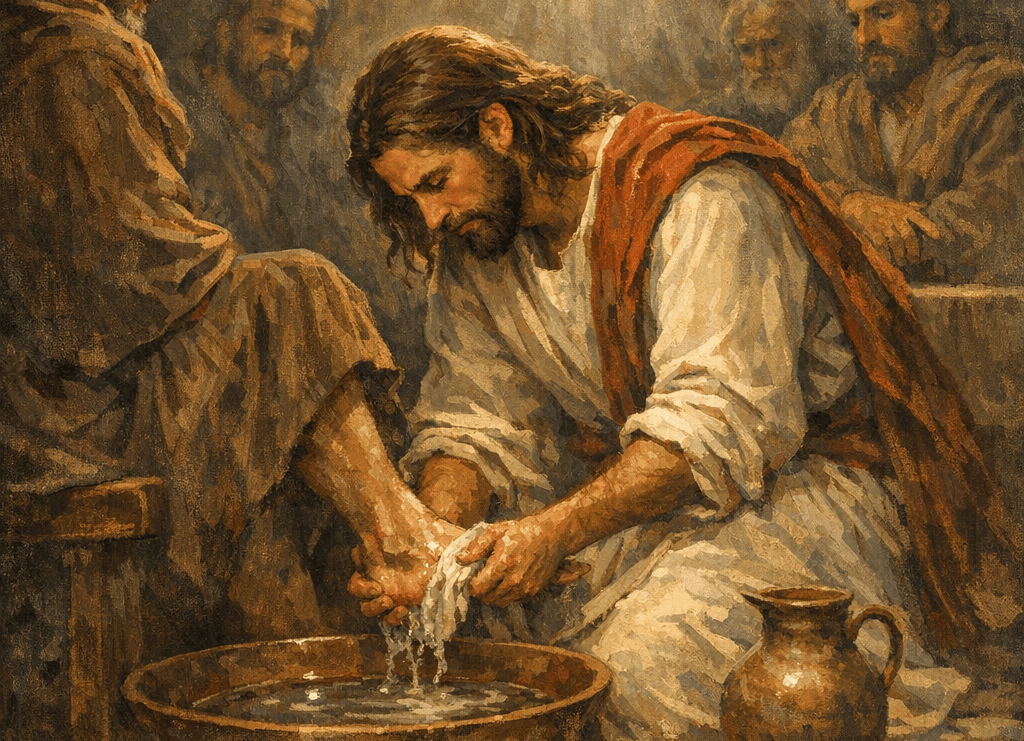
John 13 gives us a stunning example. Before Jesus washed the disciples’ feet, John emphasizes that Jesus knew:
- “the Father had given all things into his hands,”
- that he “had come from God,”
- and that he “was going to God.”
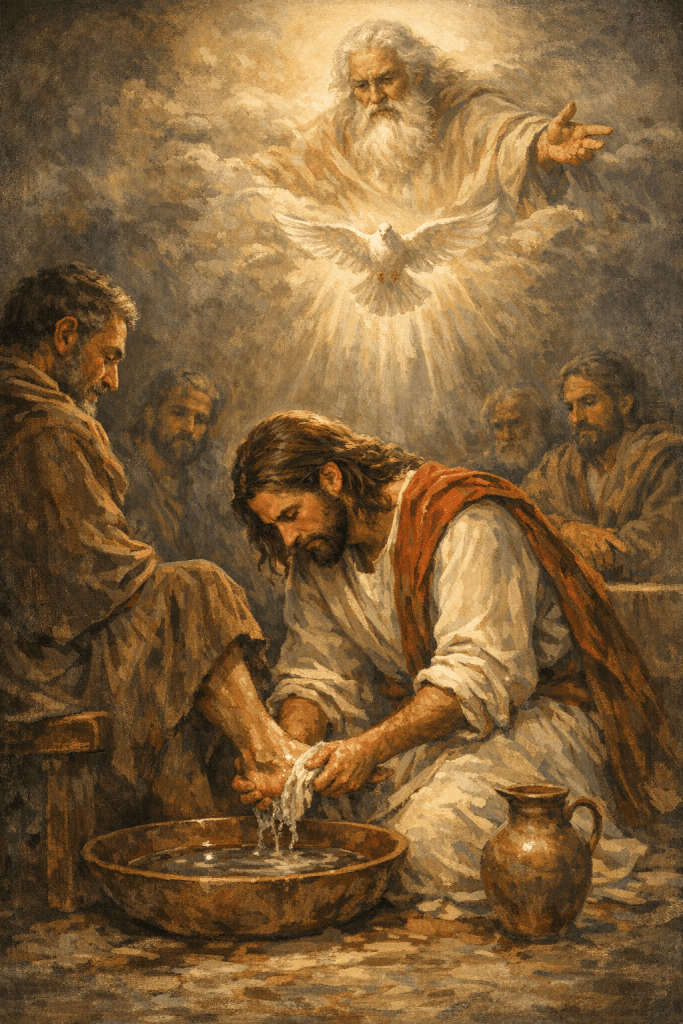
Only after knowing his full authority and divine commission does he take the role of a servant. His humility flows from confidence, not insecurity.
Like the manna that “came from God” in John 6, Jesus’ origin speaks to divine purpose and identity, not literal physical descent. He knew who he was – and therefore chose to serve.
Humility is not pretending we have no strength. It is choosing to use our strength to serve others. This is the pattern Paul calls us to follow.
Christ’s Self‑Emptying: Power Refused, Service Embraced (Philippians 2:6–8)

Paul describes Jesus as one who “did not grasp at equality with God.” This echoes Genesis 3, where Eve reached for equality with God in the wrong way – grasping for status instead of trusting God.
Jesus, by contrast, refused to grasp.
Though he was the Son of God with access to divine power, he did not use that power for self‑advancement. His temptations in Matthew 4 reveal this clearly. He could have taken “all the kingdoms of the world,” but instead chose obedience, suffering, and service.
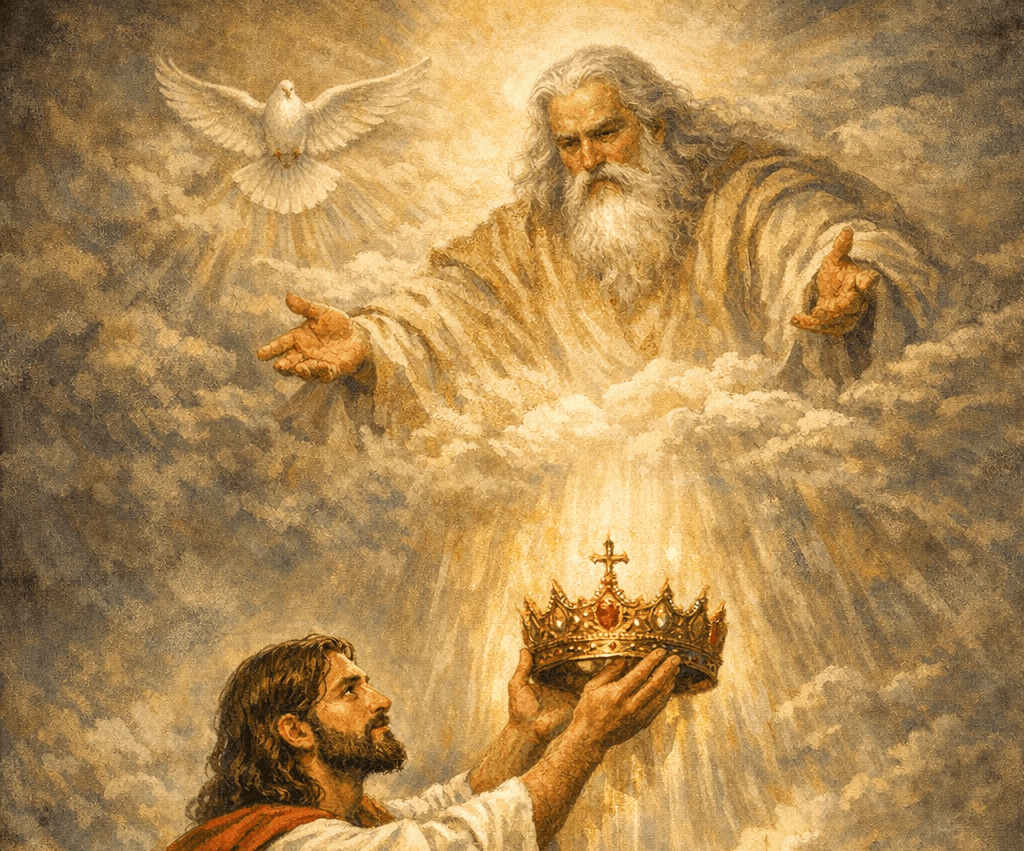
Isaiah had foretold this path: the Messiah would be a servant, “despised and rejected,” who would bear the sins of many. The cross had to come before the crown!
So when Paul says Jesus “emptied himself,” he is describing a voluntary lowering – a refusal to use divine authority for personal gain. Jesus humbled himself even to the point of death, and not just any death, but “death on a cross,” the most shameful and humiliating form torture and execution of the ancient world.

Christ Exalted: The Family Name Bestowed (Philippians 2:9–11)
Because Jesus chose the path of obedience, “God highly exalted him.”
After the resurrection, God gave him “the name that is above every name.” This is the moment Jesus is granted the family name – Yahweh – not just because he was now immortal and incorruptible – sharing in the divine nature, but also in representation and authority – God’s son and agent. He is the one through whom God’s glory is revealed and God’s purpose is accomplished.
Paul describes a future moment when “every knee will bow” and “every tongue confess that Jesus Christ is Lord.” This universal acknowledgment of Christ’s lordship does not diminish the Father; rather, it directs all glory to Him. Jesus’ exaltation is God’s work, and Jesus’ lordship is exercised on God’s behalf.
Christ’s exaltation fits perfectly within the broader biblical story. He will reign until all enemies are subdued, including sin and death.
After the thousand-year reign, when death is abolished and God’s purpose is complete, Jesus will “deliver up the kingdom to God,” so that “God may be all in all” (1 Corinthians 15:24–28). Christ’s current and future exaltation leads ultimately to the full revelation of God’s glory.
Conclusion: The Pattern for Every Disciple
Philippians 2:1–11 is not merely a doctrinal statement – it is an invitation.
We are called to follow the same downward‑then‑upward pattern:
- refusing to grasp for status,
- choosing service over self‑promotion,
- trusting God to exalt in His time and His way.
Christ’s humility was not weakness – it was controlled strength, directed toward the salvation and blessing of others. This is Biblical meekness!
Because he humbled himself, God exalted him.
This is the mind we are called to share, the path we are invited to walk, and the hope we are promised to inherit.




 The Original Gospel
Leave a comment