- Introduction & Background of the Bible
- The Bible Interprets Itself
- Why the Bible is difficult to Read
- Workshop: Bible Echoes – The Promises to Abraham
Learn to Read the Bible Effectively Seminar Workbook Week 1
WELCOME!
We know that your time is valuable. So, we promise to make your time with us productive and enjoyable.
Our goal is to teach you to read the Bible more effectively. You are certainly capable of reading and understanding this great book, but if you are like most people, you are occasionally:
Frustrated, Confused, Bored, or Overwhelmed by the task at hand.
We assume that you believe that the Bible is the inspired Word of God and that you believe you can benefit in some way from understanding its message. We share that belief with you. But we also assume that since you are attending, that you desire help in furthering your understanding of the Bible while avoiding the many roadblocks which hinder progress. We think we can provide you with keys and tips in doing so.
A BEGINNING (BUT CRITICAL) TIP:
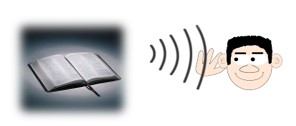
- Look for Bible “echoes”.
- Ask: What does this remind me of?
Consider this example of when the Pharisees and Herodians attempted to catch Jesus in his words, so they could arrest him. They asked, “Master, we know that thou art true, and carest for no man: for thou regardest not the person of men, but teachest the way of God in truth: Is it lawful to give tribute to Caesar, or not? Shall we give or not give? ” (Mark 12:13‑17)
Jesus recognized their treachery and asked for a penny. He asked “Whose is this image and superscription?” They reply, “Caesar”, to which Christ responds, “Render to Caesar the things that are Caesar’s and to God the things that are God’s.”
Fair enough. Pay your taxes because they belong to man’s system of things, is the clear answer. But what are the things we ought to render to God?
| Look and Listen for Bible “echoes” |
Remember Genesis 1:27. “So God created man in his own image, in the image of God created he him…”
Whose image are we in? Jesus’ full message is not merely to pay your taxes, but also that we belong to God and must render to Him His due by reflecting His image and character correctly (This is known as “God manifestation”).
This is not a mysterious connection. It is merely an association gained by careful reading.
Let’s learn more…
BACKGROUND
Holy Bible ‑ “Separate Book”
66 Books (The Bible is really a LIBRARY of Books!)
Old Testament ‑ 39 books
New Testament ‑ 27 books
40+ writers ‑ kings and peasants, doctors and fishermen, princes and herdsmen, poets, and laborers, rich and poor, educated, and illiterate
Written over a period of over 1500 years
2,930 characters in 1,551 places
Every imaginable literary form (poetry, prose, etc.).
Even with so many different writers, subjects, etc., all parts of the Bible agree with one another. Though the writers were divided by class, period, country, and disposition, there is wonderful harmony in all they wrote. There is no contradiction, no disagreement. Whence came this wonderful unity? From God! They all wrote by divine inspiration. They were God’s agents, proclaiming His message unto humanity.

INSPIRATION:
God is the Author: 2 Tim. 3:15‑17
All scripture is Inspired ‑ “God Breathed”. Scripture is sufficient in itself
Examples: David ‑ 2 Samuel 23:1‑2; Jeremiah‑ Jer. 30:1‑2
| 2Peter 1:20-21 “…no prophecy of Scripture is of any private interpretation, for prophecy never came by the will of man, but holy men of God spoke as they were moved by the Holy Spirit. |
How often you read in the Bible: “Thus saith the LORD . . . “
Men recorded God’s words not their own.
1 Peter 1:10-12
2 Peter 1:19‑21
God’s Word never fails, nor should it be added to.
Is. 40:6‑8
Prov. 30:5‑6
The Bible is the Source of Truth.
Ps. 19:7‑9 ‑ perfect, sure, right, pure, true, righteous
IMPORTANCE OF STUDY
Makes us wise unto salvation.
2 Tim. 3:15‑17
Gives us Hope.
Romans 15:4
Power of God unto Salvation.
Romans 1:16‑17
Neglect brings death.
Prov. 13:13
Prepares us to give an answer and contend for the faith.
1 Pet. 3:15
Jude 3‑4
Provides direction for daily living.
Psalm 119:105
Joshua 1:8
| Read the Bible to believe what you find…not find what you believe! |
| The Bible Interprets Itself |
WHEN ALL ELSE FAILS…
How many times have you heard of a person who spent a frustrating evening assembling his child’s bike only to find out after the fact that he has assembled the handlebars backwards!
Of course, we all know the modern proverb “when all else fails, read the instructions.”
This is also true when reading the Bible. We need to learn from our life’s experiences and recognize that the key to understanding the Bible more easily is to look within its own pages – to read the instructions more carefully!
Our tendency is to not look far enough for answers within the book when we encounter something we do not understand.
Sometimes we find it easier to just ‘google it’ and accept someone else’s opinion or answer!
A basic principle to reading the Bible more effectively lies in this simple fact:
Your questions about what the Bible teaches are answered in the Bible.
We know that is like asking, “Who is buried in Grant’s tomb?” However, with human nature, the obvious solution is often our last resort.
‘Read the instructions first’ is the obvious solution to preventing frustration with most of life’s projects.
ANSWERS ARE FOUND NEAR AND FAR
Look in the same chapter or surrounding chapters:
Christ’s explanation of the parable of the Sower
Matt. 13:3-8 compare Matt. 13:18‑23
(Note they are not adjacent)
Nebuchadnezzar’s vision of the Image
Daniel 2:31‑45
Note that Daniel recognized the dream would be revealed by God.
vs 22 “He revealeth the deep and secret things. “
Look in other books of the Bible (especially New vs Old Testament)
It was an angel who spoke to Moses in the burning bush
Exodus 3:4 compare Acts 7:30‑31
Why Jesus Said ” My God, my God, why hast thou forsaken me?”
Matt. 27:46 compare Psalm 22
DO:
- Look first to the Bible for answers to questions
- Read the entire Bible to find answers to your questions
- Write down your questions (it may be a while until you get to the answer)
- Pray for Guidance
DON’T:
- Expect quick answers
- Look at isolated passages and draw conclusions
| Overview of the Books of the Bible (Part 1) |
The “Canon” of Scripture is an authoritative list of books accepted as Holy Scripture.
The Bible is broken into two testaments, Old and New.
The Bible contains the following Table of Contents:
OLD TESTAMENT
Genesis II Chronicles Daniel
Exodus Ezra Hosea
Leviticus Nehemiah Joel
Numbers Esther Amos
Deuteronomy Job Obadiah
Joshua Psalms Jonah
Judges Proverbs Micah
Ruth Ecclesiastes Nahum
I Samuel Song of Solomon Habakkuk
II Samuel Isaiah Zephaniah
I Kings Jeremiah Haggai
II Kings Lamentations Zechariah
I Chronicles Ezekiel Malachi
NEW TESTAMENT
Matthew Ephesians Hebrews
Mark Philippians James
Luke Colossians I Peter
John I Thessalonians II Peter
Acts of the Apostles II Thessalonians I John
Romans I Timothy II John
I Corinthians II Timothy III John
II Corinthians Titus Jude
Galatians Philemon Revelation
OLD TESTAMENT:
The Law (5 books):
Genesis, Exodus, Leviticus, Numbers, Deuteronomy
The Prophets (8 books):
1. The Former Prophets (4 books):
Joshua, Judges, Samuel, Kings
2. The Latter Prophets (4 books):
Major (3 books):
Isaiah, Jeremiah, Ezekiel
Minor (1 book) The Twelve:
Hosea, Joel, Amos, Obadiah, Jonah, Micah, Nahum, Habakkuk, Zephaniah, Haggai, Zechariah, Malachi
The Writings (11 books):
1. Poetical (3 books)
Psalms, Proverbs, Job
2. Five Rolls or Scrolls (5 books)
Song of Solomon, Ruth, Lamentations, Ecclesiastes, Esther
3. Historical (3 books)
Daniel, Ezra‑Nehemiah, Chronicles
The overview of the Bible sessions will be conducted by presenting the books of the Old Testament in chronological order, based on the historical events outlined in the Bible.
The New Testament books will be presented in the (non-chronological) order as in the Bible.
GENESIS
The single most important book of the Bible.
Genesis is the beginning or foundation of the Bible, from which everything is built. Everything revealed in the other books of the Bible has its beginning in the book of Genesis (a word that means “Beginning’.
It is the first book of the Pentateuch, the first five books of the Hebrew Bible.
The name itself means “origin, source, or begetting.”
The book of Genesis, along with the book of Revelation, stand as two end posts bridging the revelation of God to man; the first telling how it all began, the last revealing in symbol how it all will finish.
In Genesis there is seen the beginnings of all that which Revelation predicts as the consummation of the Divine purpose in the earth.
For example:
Genesis speaks of a natural creation (Genesis 1)
Revelation of a spiritual creation (Revelation 3:14);
In Genesis the serpent speaks (Genesis 3:1-5)
In Revelation it is restrained (Revelation 20:2).
In Genesis, the curse is imposed (Gen. 3:17)
In Revelation it is removed (Revelation 22:3).
In Genesis, sorrow and death make their appearance (Genesis 3:16‑19)
In Revelation they are taken away (Revelation 21:4).
In Genesis, access to the tree of life is denied (Genesis 3:24)
In Revelation, access to it is opened (Revelation 2:7).
In Genesis, the first paradise is closed to man (Genesis 3:23)
In Revelation it is opened to him (Revelation 21:25).
Genesis basically can be divided into two parts:
PRIMEVAL HISTORY Chapters 1 to 11
PATRIARCHAL HISTORY Chapters 12 to 50
The first division records four outstanding events:
1. The Creation
2. The Fall of Man
3. The Flood
4. The Confusing of Tongues (Tower of Babel)
Patriarchal history is concerned with four outstanding individuals:
1. Abraham
2. Isaac
3. Jacob
4. Joseph
In addition to the natural separation into two periods of time, the book of Genesis is also divided naturally into 12 sections. These natural breaks are as follows:
1. Creation–Introduction (Gen. 1:1 ‑ 2:3).
2. The Generations of the heavens and the earth (Gen.2:4 – 4:26).
3. The Book of the Generation of Adam Gen. 5:1 – 6:8)
4. The Generations of Noah, a just man (Gen. 6:9 ‑ 9:29).
5. The Generations of the sons of Noah (Gen. 10:1 ‑11:9).
6. The Generations of Shem (Gen. 11:10‑26).
7. The Generations of Terah (Abraham) (Gen. 11:27 ‑ 25:11).
8. The Generations of Ishmael (Gen. 25:12‑18).
9. The Generations of Isaac (Gen. 25:19 ‑ 35:29).
10. The Generations of Esau (Gen. 36:1‑8).
11. The Generations of the Sons of Esau (Gen. 36:9‑43).
12. The Generations of Jacob (Gen. 37:1 ‑ 50:26).
Some Points to Consider from Genesis:
1. Reconciling Creation with the age of the Earth. Gen. 1:1
2. God’s First Promise to Man. Gen. 3:15
3. God called Abram. Gen. 12:1
4. God’s Covenant with Abram/Abraham. Gen. 12, 13, 15, 22
5. How Israel came to be in Egypt. Gen. Chapters 15, 37‑50
| Why the Bible is Difficult to Read |
If you find the Bible difficult to read, it’s probably because it is difficult to read!
Once we accept this fact and realize that God has a purpose for it, frustration can turn to challenge.
Millions of people love doing Crossword Puzzles or the daily “Wordle”!
How many spend a few minutes of time to unlock small puzzles of scripture?
Always remember:
“It is the Glory of God to conceal a thing; but the honor of kings is to search out a matter.”
Proverbs 25:2
WHY DID JESUS SPEAK IN PARABLES?
The disciples posed this question to him in Matthew 13:10.
His answer reveals that it is a separation process. “It is given unto you. . . unto them it is not given “
(If it is a question of whether or not this is fair, consider Paul’s comment in Romans 9:18‑21).
WHO IS TRUTH REVEALED TO?
1. To “babes” Matthew 11:25‑26
2. Certainly not to those who consider themselves wise or “learned”!
See 1 Corinthians 1:17‑31
HOW DOES ONE GAIN UNDERSTANDING?
1. By application of time and energy.
Social status or financial position will not give anyone an advantage over another. Understanding requires a purchase “without money.”
Isaiah 55:1, 3
Prov. 23:23
2. Slowly!
God never revealed anything all at once and has always taught a sure slow effective method of achieving a task.
Hebrews 1:1
Exodus 23:29
UNDERSTANDING IS PROMISED TO THOSE WHO SEEK DILIGENTLY
We must ask in faith (and this involves prayer), but understanding is assured if we are patient to receive it.
Matt. 7:7‑8
James 1:5‑6
| YOU CANNOT SPEED READ THE BIBLE… if you want to read it effectively! |
Here’s a worksheet if you want some ‘homework’… it’s downloadable too.
Go To: Study 2 – Why Two Testaments & Prophecy

 The Original Gospel