
- Why 2 Testaments?
- The Role of Prophecy
- Tips on Reading
- Overview of the Books of the Bible (Part 2)
- Terminology (Part 1)
| Why 2 Testaments? |
WHAT IS A TESTAMENT OR COVENANT?
The Contents Page of the Bible shows it as divided into two parts: the Old and New Testaments.
The word “testament”: means covenant, meaning an agreement, promise or pledge between two parties.
The teaching of the Bible is based upon covenants of promise that God made with faithful men in times past.
It teaches that “Jesus Christ (came) . . . to confirm the promises made unto the fathers; and that the Gentiles might glorify God for His mercy (Rom. 15:8‑9). “
Again: “Whereby are given unto us exceeding great and precious promises; that by these ye might be partakers of divine nature, having escaped the corruption that is in the world through lust (2 Peter 1:4).”
WHY OLD vs. NEW TESTAMENT?
The Lord Jesus Christ is described as the Mediator of the New Covenant ‑ Heb. 9:15.
The events surrounding the Lord Jesus Christ provide a natural means of division of the scripture, between those writings dealing with the Old Testament and the New Testament. However, it must be remembered that this division of the Bible into Old and New Testaments is man‑made.
The whole Bible is the revelation of God, and is one complete and indivisible book. Some claim that the Old Testament became outdated when Christ appeared nearly 2000 years ago, but that is not so. The New Testament constantly refers the reader back to the Old.
Christ, in preaching, told his listeners to “search the Scriptures” (John 5:39) by which he meant the Old Testament.
He appealed to those same Scriptures to expound the things concerning himself: “Beginning at Moses and all the prophets, he expounded unto them” (the disciples) “in all the Scriptures the things concerning himself (Luke 24:27).” The Bible will never be properly understood if the Old Testament is neglected. The Gospel, itself, is based upon an Old Testament promise: “God preached the gospel unto Abraham, saying, In thee shall all nations be blessed.” (Gal. 3:8)
Much of the Old Testament is prophecy, today being fulfilled, or about to be fulfilled.
To illustrate this, consider the following promises or covenants made by God in the Old Testament.
1. In Eden following the sin of Adam and Eve ‑ Gen. 3:15.
2. Promises to Abraham, Isaac, and Jacob ‑ the “fathers of old.”
3. Promise to David ‑ 2 Samuel 7:12‑17
4. Promises of the Kingdom to the prophets ‑ Isaiah 9:6‑7.
The Angel’s Testimony in the New Testament in Luke 1:31‑33:
v. 31 ‑ relates to the “seed of the woman” promised to Adam & Eve
v. 32 ‑ relates to the promise of the “Son of God” made to David
v. 33a ‑ relates to “the seed” that was promised to Abraham
v. 33b ‑ relates to the promises made to the prophets concerning the “kingdom” of the Messiah
Consider also Zacharias’ proclamation in Luke 1:67‑79.
Another example of how God’s promises span the testaments is found in Paul’s letter to the Galatians.
Suggest you review: Gal. 3:8-9 ‑ Abraham, Christ, Believers
God’s Promises are not yet complete. This is made evident through the prophecy of Jeremiah.
Suggest you review: Jeremiah 31:31‑34

| The Role of Prophecy |
TWO‑FOLD PURPOSE OF PROPHECY
Forthtelling ‑
Prophecy, according to 1 Corinthians 14, involves building up, exhortation, and comfort (14:3), edification (14:4), conviction and conversion (14:24,25), and instruction (14:31). (See also 2 Peter 3:1-3, “to stir up your pure minds by way of remembrance.”)
Foretelling ‑
Prophecy also served to warn man regarding his failure and need of repentance and salvation at the hand of God, while at the same time confirms the certainty of God’s plan. (Example: Heb. 11:7)
NOTE: Prophecy is not for the purpose of satisfying idle curiosity about future events, but to assist believers to act in faith, to be moved with fear, and to make such preparations that will save their household.
PRINCIPLES IN UNDERSTANDING PROPHECY
1. Analyze the passage in terms of history, context, and its literal meaning.
2. Note exactly to whom or to what the passage refers. Observe whether the prophecy is forthtelling or foretelling. Is it directed at comfort, exhortation, or edification, or is it speaking about what will happen?
3. Distinguish between direct and symbolic predictions.
4. Remember that God’s ultimate revelation in Christ illuminates all earlier revelations.
5. Keep in mind that apocalyptic imagery is difficult to interpret, and to be successful interpreters, we must follow the basic principles for interpreting all figurative language. The imagery should have made sense to the original readers.
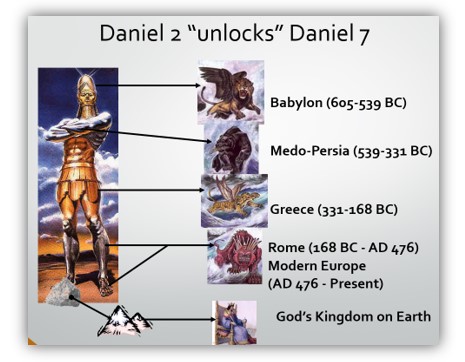
EXAMPLE OF FULFILLED PROPHECY ‑ DANIEL 2
Prophecy of Nebuchadnezzar’s Image
Head of Gold ‑ Babylon
Breast & Arms of Silver ‑ Medo‑Persia
Belly & Thighs of Brass ‑ Greece
Legs of Iron ‑ Rome
WARNING AGAINST FALSE PROPHETS
It is recorded for us in 2 Timothy 4, beginning in verse 3:
For the time will come when they will not endure sound doctrine; but after their own lusts shall they heap to themselves teachers, having itching ears; And they shall turn away their ears from the truth, and shall be turned unto fables.
See also: Deut. 13:1-5, 18:20‑22; Jeremiah 14:14; 1 Tim. 4:1‑3; 2 Peter 2:1‑3
SOME FAMOUS PROPHETS:
Moses Nathan Isaiah Christ
Elijah Jeremiah Ezekiel Daniel
| Tips on Reading |
The importance of reading is summed up in 2 Timothy 3:15‑17.
ALL SCRIPTURE . . .
Makes one wise unto salvation.
Is profitable for:
‑ doctrine
‑ reproof
‑ correction
‑ instruction in righteousness
“So that the man of God may be thoroughly equipped for every good work.”
FUNDAMENTAL PRINCIPLE:
Steady consistent diet of the Word of God.
We recommend regular intake of God’s Word: 15 to 20 minutes daily. The Bereans are described in Acts as being “more noble than those in Thessalonica, in that they received the word with all readiness of mind, and searched the scriptures daily, whether those things were so (Acts 17:11).”
There are many different readings plans available. One such plan is structured to take a person through the Bible in a year, reading 3 portions daily. This is outlined by the Daily Bible Companions included in this book. By doing two readings from the Old Testament and one from the New Testament daily, at the end of the year, a person has read the Old Testament once, and the New Testament twice.
A good example for us is concerning Israel and the daily and evening sacrifice. They were to begin and end the day with prayer and meditation with God.
| TIP # 1: PREPARATION – Allow Time – Select Translation – Be Comfortable |
HOW SHOULD WE APPROACH READING THE BIBLE?
If we are to gain what we can from Bible study, we need to approach it with the right attitudes. We need an openness to new ideas. If we approach all ideas with a “fortress mentality” –thinking that our main job is to defend the walls that make up the fortress of Christianity–we have very little space for growth.
The Bible is a book of strength that has withstood all kinds of attacks during its history. As in all other areas of study scholars build upon and re‑evaluate the work of earlier scholars. We need not fear examining new ideas and evaluating them carefully in the light of all the teachings of the Bible.
We need an attitude of willingness to meditate on what we are learning and to think through for ourselves how our learning can and should be applied in our own lives. To do this, it is usually helpful to share our ideas and interpretations with other Bible students for discussion and evaluation. We can learn from each other.
Bible study can be difficult at times. It is also exhilarating and life changing. Study of the Bible can enrich us as no other study can. You will experience a new exhilaration as you learn to make your own judgments based on firm principles, and the Bible will become more alive and powerful in your life. Remember, you are intended to understand this remarkable book and to meet God in its pages.
| TIP #2: HOW TO READ – Read Aloud – Listen for Echoes – Ask Yourself Questions (Deut. 11:18-19; Joshua 1:8) |
BASIC PRINCIPLES FOR READING THE BIBLE
1. Study every passage within its literary context. Literary context includes both a text’s immediate setting (the verses around it) and its relationship to the entire book.
2. Recognize that the social, historical, and cultural environment of a biblical passage differs from that of today, and then try to understand a passage in light of those differences.
3. Translations often reflect the translator’s understanding. Therefore, when studying a passage, compare several translations, or versions, to try and discover the most likely meaning of a word or phrase.
4. Interpret any single passage in light of what the author has written elsewhere.
5. Interpret the Bible as a whole. That is, interpret the Bible in light of the entire message of the Bible.
| TIP # 3: WHEN YOU DO NOT UNDERSTAND – Be Patient (Isaiah 55:9; Prov. 25:2) – Use Other Translations – Use Study Tools – Seek help from others (Acts 8:26-40) – Pray for God’s help to understand His Word (James 1:5) |
Some questions to consider while reading:
1. What is the main subject?
2. Who are the main people?
3. What does it say about God?
4. What does it say about Christ?
5. What is the key or main verse?
6. What is the central lesson?
7. What are the main promises?
8. What are the main commandments/instructions?
9. What error should I avoid?
10. What example is there to follow?
11. What do I need most in this chapter to apply to my life today?
12. Are there cross references that can be used to develop the theme of the passage or add clarity of understanding?
13. Are there any key words or phrases? Do they appear in other sections of the same book as well as other books?
14. Are there any words I should look up to clarify a definition?
| Overview of the Books of the Bible (Part 2) |
Job
Author: Probably Moses
Time: Apparently around 1600 B.C.
Summary: Job is the first poetic book of the O.T. It relates the anguish of a righteous man as he and his friends struggle to explain the affliction which has befallen Job and has stripped him of his wealth, his family, and his health. The dialogue continues between Job and his friends as each presents his opinion on the reasons behind such troubles. The purpose of the book of Job is to counter the belief in “Exact Retribution.”
AFFLICTION OF JOB ‑ Chapter 1:1 ‑ 2:13
1. Description of Job ‑ Ch. 1:1‑5
2. Affliction of Job ‑ Ch. 1:6 ‑ 2:10
3. Arrival of Job’s Three Friends ‑ Ch. 2:11‑13
DEBATES BETWEEN JOB AND HIS THREE FRIENDS ‑ Chapter 3:1 ‑ 31:40
1. First Cycle of Debate ‑ Ch. 3:1 ‑ 14:22
2. Second Cycle of Debate ‑ Ch. 15:1 ‑ 21:34
3. Third Cycle of Debate ‑ Ch. 22:1 ‑ 31:40
THE SPEECHES OF ELIHU ‑ Chapter 32:1 ‑ 37:24
RESTORATION OF JOB ‑ Chapter 38:1 ‑ 42:17
1. God’s First Challenge to Job ‑ Ch. 38:1 ‑ 40:5
2. God’s Second Challenge to Job ‑ Ch. 40:6 ‑ 41:34
3. Job’s Submission and Restoration – Ch. 42
Exodus
Author: Moses
Time: 1650-1500 B.C.
Summary: The title “Exodus” means “a going out”. It records the great numerical growth of the Israelites during their enslavement in Egypt. It introduces Moses and records the plagues God brought upon Egypt to secure His peoples release from the bondage of slavery. From this point, the people are given the proclamations of the covenant of the Law at Mt. Sinai. The book concludes with a description of the order of worship centered around the Tabernacle and the Law of Moses. This is the second book of the Pentateuch, the first five books of the Jewish Scriptures.
THE LIBERATION OF ISRAEL‑ Chapter 1:1 ‑ 18:27
1. Introduction ‑ Ch. 1:1‑7
2. Bondage in Egypt‑ Ch. 1:8‑22
3. Preparation of the Deliverer ‑ Ch. 2:1 ‑ 4:31
4. The Mission of Moses to Pharaoh ‑ Ch. 5:1 ‑ 7:7
5. God’s Wonders in the land of Egypt ‑ Ch. 7:8 ‑ 11:10
6. The Passover and the departure of Israel ‑ Ch. 12:1 ‑ 15:21
7. Israel in the Wilderness ‑ Ch. 15:22 ‑ 18:27
ISRAEL AT SINAI ‑ Chapter 19:1 ‑ 40:38
1. Establishment of the covenant at Sinai ‑ Ch. 19:1 ‑ 24:11
2. Directions for the Tabernacle and the Priesthood ‑ Ch. 24:12 – 31:18
3. The Covenant broken and restored ‑ Ch. 32:1 ‑ 34:35
4. Building of the Tabernacle ‑ Ch. 35:1 ‑ 39:43
5. Erection and Consecration of the Tabernacle ‑ Ch. 40:1‑38
Leviticus
Author: Moses
Time: 1500 B.C.
Summary: The third book of the Pentateuch takes its name from one of the 12 sons of Jacob, Levi, whose family was ordained by God to minister to Him as priests. The book covers the laws of the Jewish people regarding worship and religious activities, both personal and national, including the Day of Atonement and sacrificial offerings. It contained laws regarding cleanliness, morality, ethics, and hygiene which pertained to the Jews on a day‑to day basis. Animal sacrifice was introduced as an atonement for the individual and national sins of the people.
ACCESS: SACRIFICE AS THE BASIS OF FELLOWSHIP‑ Chapter 1:1 ‑17:16
1. The Offerings (Propitiation) ‑ Ch. 1:1 ‑ 6:7
2. The Priesthood (Mediation) ‑ Ch. 6:8 ‑ 10:20
3. The People (Purification) ‑ Ch. 11:1 ‑ 16:34
4. The Altar (Reconciliation) ‑ Ch. 17:1‑16
WALK: THE OBLIGATIONS OF FELLOWSHIP (SEPARATION) ‑ Chapter 18:1 ‑ 27:34
1. Regulations for the People – Ch. 18:1 – 20:27
2. Regulations for the Priests – Ch. 21:1 – 22:33
3. Regulations for the Nation – Ch. 23:1 – 24:23
4. Regulations for the Land – Ch. 25:1 – 27:34
Numbers
Author: Moses
Time: 1500-1460 B.C.
Summary: Numbers is the fourth book of the Pentateuch. It is a historical book taking its Greek name from the word “Arithmathai”, meaning numbering, because two census were taken to number the people. However, it was known to the Jewish people as “In the Wilderness”, because it primarily tells of the rebellion of the Israelites in the Wilderness after the exodus from their bondage in Egypt. Because of this rebellion, only 2 men of the adults leaving Egypt were to enter the promised land of Canaan. The book covers a 38-year period.
PREPARATION IN THE WILDERNESS ‑ Chapter 1:1 ‑ 10:10
1. Census of Warriors ‑ Ch. 1:1‑54
2. Order of Worshippers ‑ Ch. 2:1‑34
3. Service of Workers ‑ Ch. 3:1 ‑ 4:49
4. The Camp Cleansed from Defilement ‑ Ch. 5:1‑31
5. Separated to God ‑ Ch. 6:1‑27
6. Cooperating with God ‑ Ch. 7:1‑88
7. God with His People ‑ Ch. 7:89 ‑ 10:10
PROVOCATION IN THE WILDERNESS ‑ Chapter 10:11 ‑ 19:22
1. Journeying at God’s Command ‑ Ch. 10:11‑36
2. Murmuring and Discontent‑ Ch. 11:1 ‑ 12:16
3. Lack of Faith and Rejection‑ Ch. 13:1 ‑ 14:45
4. Instructions for the Next Generation ‑ Ch. 15:1‑41
5. Revolt Against God’s Appointments ‑ Ch. 16:1 ‑ 19:22
VINDICATION IN THE WILDERNESS ‑ Chapter 20:1 ‑ 36:13
1. The Fortieth Year: From Kadesh to Hor ‑ Ch. 20:1 ‑ 21:3
2. To Moab via Ezion‑Geber ‑ Ch. 21:4 ‑ 22:1
3. Balaam’s Curse Turned into a Blessing ‑ Ch. 22:2 ‑ 25:18
4. Preparations to Enter the Land ‑ Ch. 26:1 ‑ 36:13
Deuteronomy
Author: Moses
Time: 1460 B.C.
Summary: This book is the last of the Pentateuch. Its Greek name means “second law” which was the repetition of the law recorded in Leviticus. It was given on the plains of Moab just prior to the entrance into the promised land of Canaan by the nation of Israel under the command of Joshua. This was Moses’ last address to the Nation as a whole prior to his death. At this time only 2 men were left of the generation which escaped from Egypt. Therefore, the repetition of the law was extremely important to the welfare of the new generation.
FIRST DISCOURSE: RETROSPECT‑ ISRAEL’S FAITHLESSNESS AND GOD’S CARE
Chapter 1:1 ‑ 4:43
1. Failure at Kadesh‑Barnea ‑ Ch. 1:1‑46
2. Thirty‑eight Years of Wandering ‑ Ch. 2:1 ‑ 3:29
3. Lessons of the Past Impressed Upon the New Generation ‑ Ch 4:1‑40
4. Appointment of Cities of Refuge ‑ Ch. 4:41‑43
SECOND DISCOURSE: REVIEW ‑ WHAT THE PRESENT GENERATION SHOULD HEED ‑ Chapter 4:44 ‑ 26:19
1. Review of the Divine Covenant‑ Ch. 4:44‑ 5:33
2. What the Covenant Demands ‑ Ch. 6:1 ‑ 26:19
THIRD DISCOURSE: WARNING ‑ THE NATION’S SOLEMN RESPONSIBILITY
Chapter 27:1 ‑ 28:68
1. A Ceremony of Remembrance in the Land ‑ Ch. 27:1‑26
2. The Blessings of the Law ‑ Ch. 28:1‑14
3. The Cursings of the Law ‑ Ch. 28:15‑68
FOURTH DISCOURSE: COVENANT ‑ TERMS THAT WOULD ENSURE ISRAEL’S CONTINUED
OCCUPANCY OF THE LAND ‑ Chapter 29:1 ‑ 30:20
1. With Whom the Covenant was Made ‑ Ch. 29:1‑15
2. Punishment Resulting from Breaking the Covenant ‑ Ch. 29:16‑29
3. Divine Mercy Despite Failure ‑ Ch. 30:1‑20
FIFTH DISCOURSE: COUNSEL ‑ MOSES’ FINAL WORDS OF ADVICE ‑ Chapter 31:1‑23
SIXTH DISCOURSE: INSTRUCTION ‑ THE WRITTEN LAW PRESERVED AS A WITNESS ‑ Chapter 31:24‑29
SEVENTH DISCOURSE: SONG ‑ A PSALM OF WITNESS AGAINST ISRAEL – Chapter 31:30 ‑ 32:52
1. Repetition of Divine Goodness and Human Folly‑ Ch. 31:30 ‑ 32:43
2. Sequel to the Song ‑ Ch. 32:44‑52 (compare Ex. 15)
EIGHTH DISCOURSE: BLESSING, FUTURE GLORY OF THE TRIBES Chapter 33:1‑29
1. Introduction ‑ Ch. 33:1‑5
2. The Blessings ‑ Ch. 33:6‑25
3. The Source and Summary of the Blessings ‑ Ch. 33:26‑29
NINTH SECTION: AN EPITAPH ‑ DEATH ‑ GOD BURIES HIS WORKMAN ‑ Chapter 34:1‑12
Joshua
Author: Joshua
Time: 1460‑1420 B.C.
Summary: Joshua was selected by God to succeed Moses and lead the nation into the Promised land. The book outlines the conquest and occupation by Israel under his military leadership. God explicitly states that all the inhabitants of the land were to be utterly driven out or destroyed in order to assure spiritual purity and complete devotion to God.
ENTRANCE INTO THE PROMISED LAND ‑ Chapter 1:1 ‑ 5:12
1. God’s Commission to Joshua ‑ Ch. 1:1‑9
2. Joshua’s Mobilization for crossing the Jordan ‑ Ch. 1:10‑18
3. Mission of the spies ‑ Ch. 2:1‑24
4. Crossing of the Jordan ‑ Ch. 3:1 ‑ 5:1
5. Renewal of Circumcision and Passover observance ‑ Ch. 5:2‑12
CONQUEST OF THE PROMISED LAND ‑ Chapter 5:13 ‑ 12:24
1. Appearance of the Captain of the Lord’s Host‑ Ch. 5:13 ‑ 6:5
2. The Central Campaign‑ Ch. 6:6 ‑ 8:29
3. Establishment of Israel’s covenant as the Law of the Land ‑ Ch. 8:30‑35
4. The Southern Campaign ‑ Ch. 9:1 ‑ 10:43
5. The Northern Campaign Ch. 11:1‑15
6. Summary of the Conquest ‑ Ch. 11:16‑23
7. Appendix: Catalog of the defeated kings ‑ Ch. 12:1‑24
DIVISION OF THE PROMISED LAND ‑ Chapter 13:1 ‑ 22:34
1. God’s command to divide the land ‑ Ch. 13:1‑7
2. Territory of the tribes west of the Jordan river‑ Ch. 13:8‑33
3. Beginning of the division of Canaan ‑ Ch. 14:1‑15
4. Territory of the tribe of Judah ‑ Ch. 15:1‑63
5. Territory of the Joseph tribes ‑ Ch. 16:1‑17:18
6. Territories of the seven remaining tribes ‑ Ch. 18:1 ‑ 19:51
7. Inheritance of Levi‑ Ch. 20:1 ‑ 21:42
8. Summary of the conquest and apportionment ‑ Ch. 21:43‑45
9. Appendix: Departure of the tribes east of the Jordan river ‑ Ch. 22:1‑34
JOSHUA’S FINAL SPEECHES ‑ Chapter 23:1 ‑ 24:33
1. Joshua’s Farewell address to the leaders of Israel ‑ Ch. 23:1‑16
2. Renewal of the Covenant commitment at Shechem ‑ Ch. 24:1‑28
3. Appendix: Death of Joshua and subsequent conduct of Israel ‑ Ch. 24:29‑33
Judges
Author: Probably Samuel
Time: 1420-1140 B.C.
Summary: The book of Judges, which means “Champions or Rescuers”, covers the period from the death of Joshua to the establishment of the monarchy under Saul. This was a time of great immorality as the result of the failure of the Israelites to drive out the inhabitants of the land. There were “judges” set up by God who were to direct and judge the affairs and people of Israel. The book of Judges closes by setting the stage for the people’s desire for a human king.
INTRODUCTION ‑ Chapter 1:1 ‑ 2:5
1. Political background of the period of the Judges ‑ Ch. 1:1‑36
2. Religious background of the period of the Judges ‑ Ch. 2:1‑5
HISTORY OF THE JUDGES ‑ Chapter 2:6 ‑ 16:31
1. Israel’s failure to subdue the enemy nations ‑ Ch. 2:6 ‑ 3:6
2. The oppressors and the deliverers of Israel ‑ Ch. 3:7 ‑ 16:31
LAWLESS CONDITIONS DURING THE PERIOD OF THE JUDGES ‑ Chapter 17:1 ‑ 21:25
1. Appendix 1: Corruption of Doctrine ‑ Ch. 17:1 ‑ 18:31
2. Appendix 2: Corruption of Practice ‑ Ch. 19:1 ‑ 21:25
Ruth
Author: Not known for certain
Time: 1250 B.C.
Summary: The book of Ruth is dated during the period of the Judges. It shows that in a time of national decline and immorality, God preserved a remnant who could serve as the core for a future revival. This would be accomplished in Ruth’s descendant, David, from whom the Messiah would come. No indication of the author is given. It is thought that the book is written after the period of the Judges and describes customs of that time period.
1. Ruth’s Noble Choice ‑ Ch. 1:1‑22
2. Ruth’s Faithful Service ‑ Ch. 2:1‑23
3. Ruth’s Virtuous Appeal‑ Ch. 3:1‑18
4. Ruth’s Blessed Reward ‑ Ch. 4:1‑22
I & II Samuel
Author: Samuel, Nathan and Gad
Time: 1150‑1000 B.C.
Summary: I Samuel is the first of two historical books which illustrates Israel’s transition from a loose confederation of tribes to a strong and united nation. It portrays the anointing of the first king of Israel, Saul, by a great prophet, Samuel. It recounts the degenerating reign of Saul and the succession of his throne by David, a man after God’s own heart. In the original Hebrew text, the books of Samuel were considered one book by the Hebrew scribes. The second book begins with the death of Saul and the ascension of David to the throne. The rest of the book records the reign of David regarding conquered lands, as well as political intrigues. It concludes with the blessing of Solomon by David.
THE LIFE OF SAMUEL ‑ Chapter 1:1 ‑ 7:17
1. The birth and childhood of Samuel ‑ Ch. 1:1 ‑ 4:1a
2. The capture and return of the ark ‑ Ch. 4:1b ‑ 7:1
3. The victory over the Philistines ‑ Ch. 7:2‑17
THE LIFE OF SAUL‑ Chapter 8:1 ‑ 14:52
1. Israel’s request for a king ‑ Ch. 8:1‑22
2. Political life of Saul ‑ Ch. 9:1 ‑ 12:25
3. War of independence ‑ Ch. 13:1 ‑ 14:52
THE EARLY LIFE OF DAVID ‑ Chapter 15:1 ‑ ll Sam. 20:26
1. Saul rejected by Samuel ‑ Ch. 15:1‑35
2. David anointed to be king ‑ Ch. 16:1‑13
3. David in the court of Saul ‑ Ch. 16:14 ‑ 19:17
4. David in exile ‑ Ch. 19:18 ‑ 31:13
5. David, king at Hebron ‑ ll Sam. 1:1 ‑ 4:12
6. David, king at Jerusalem ‑ Ch. 5:1 ‑ 8:18
7. David’s life as King ‑ Ch. 9:1 ‑ 20:26
THE LAST DAYS OF DAVID ‑ Chapter 21:1 ‑ 24:25
1. The famine ‑ Ch. 21:1‑14
2. Heroic exploits ‑ Ch. 21:15‑22
3. David’s psalm ‑ Ch. 22:1‑51
4. David’s testament‑ Ch. 23:1‑7
5. Heroic exploits ‑ Ch. 23:8‑39
6. Census and plague ‑ Ch. 24:1‑25
Psalms
Author: David and others
Time: 1000 ‑ 7000 B.C.
Summary: The Psalms are divided into five books, each according to a specific classification. The Psalms are a form of Hebrew poetry, many of which were accompanied by music. The content of the Psalms includes Messianic prophecy, praise to God and visions of the future Kingdom and its Glory. David is named as author of approximately half of the Psalms. A handful of other men are responsible for approximately 15, while the remaining are unnamed.
BOOK I ‑ PSALMS 1‑4 Concerns Man – Gives the Counsel of God to Man
BOOK ll ‑ PSALMS 42‑72 Concerns Israel – The Counsel of God to Israel
BOOK lll ‑ PSALMS 73‑89 Concerns the Sanctuary and the Law
BOOK IV‑ PSALMS 90‑106 Concerns Israel and the Nations of the Earth
BOOK V‑ PSALMS 107‑150 Concerns God and His Word
| Terminology (Part 1) |
FAITH ‑ belief or trust
“Now faith is the substance of things hoped for, the evidence of things not seen. ” (Hebrews 11:1)
ATONEMENT ‑ to cover, purge, make reconciliation, cover over with pitch
“And this shall be an everlasting statue unto you, to make an atonement for the children of Israel for all their sins once a year. And he did as the LORD commanded Moses.”
(Leviticus 16:34)
HELL ‑ grave, pit
“(David) seeing this before spake of the resurrection of Christ, that his soul was not left in hell, neither his flesh did see corruption. ” (Acts 2:31)
LORD OF HOSTS ‑ Yahweh = “He who will be”
Sabaoth = “armies”
the proper name of the one true God + that which goes forth, army, war, warfare, host
“Then said David to the Philistine, Thou comest to me with a sword, and with a spear, and with a shield: but I come to thee in the name of the LORD of hosts, the God of the armies of Israel, whom thou hast defied. ” (2 Samuel 17:45)
CHRIST ‑ “anointed”, Hebrew equivalent is Messiah
“Art thou the Christ, the Son of the Blessed? ” Mark 14:61b
JESUS ‑ Greek form of Hebrew name Joshua; meaning “Yahweh is salvation”
“And she shall bring forth a son, and thou shalt call his name JESUS: for he shall save his people from their sins. ” (Matthew 1:21)
JUSTIFICATION ‑ the act of God declaring men free from guilt and acceptable to him
“Therefore as by the offence of one judgment came upon all men to condemnation; even so by the righteousness of one the free gift came upon all men unto justification of life. “
(Romans 5:18)
BAPTISM ‑ immersion, submersion in water, to dip (in dye).
“Therefore we are buried with him by baptism into death: that like as Christ was raised up from the dead by the glory of the Father, even so we also should walk in newness of life. ” (Romans 6:4)
SANCTIFICATION ‑ consecration, make separate or holy
“Elect according to the foreknowledge of God the Father, through sanctification of the Spirit, unto obedience and sprinkling of the blood of Jesus Christ. ” (2 Peter 1:2)
RESURRECTION ‑ a rising from the dead
“For if we have been planted together in the likeness of his death, we shall be also in the likeness of his resurrection. ” (Romans 6:5)
SOUL ‑ that which breathes, the breathing substance/being, life, creature
“And the LORD God formed man of the dust of the ground, and breathed into his nostrils the breath of life; and man became a living soul. ” (Genesis 2:7)
IMMORTALITY ‑ undying, not subject to death, everlasting
“Who only hath immortality, dwelling in the light which no man can approach unto; whom no man hath seen, nor can see: to whom be honor and power everlasting. Amen. “
(2 Timothy 6:16)
HOLY ‑ apartness, sacredness, separate
“Speak unto all the congregation of the children of Israel, and say unto them, Ye shall be holy: for I the LORD your God am holy. ” (Leviticus 19:2)
HOSANNA ‑ meaning “save now”
“Took branches of palm trees, and went forth to meet him, and cried, Hosanna: Blessed is the King of Israel that cometh in the name of the Lord. ” (John 12:13)
GOSPEL ‑ meaning “Glad Tidings” or “Good news”
“And Jesus went about all Galilee, teaching in their synagogues, and preaching the gospel of the kingdom, and healing all manner of sickness and all manner of disease among the people. ” (Matthew 4:23)
CHRONOLOGICAL – the order in which events occured; according to time.
METAPHOR – A figure of speech, a word or phrase suggesting a resemblance, thereby aiding in understanding
SYMBOL – with respect to Bible teaching or meaning, a symbol can be verbal and is then the same as a metaphor or it can be an object such as a sacrificial animal. Symbols are used both to aid understanding and encourage thoughtful consideration, and they are used as a shorthand for various concepts.
PARABLE – a short story designed to teach a truth or a moral lesson.
“And with many such parables spake he the word unto them, as they were able to hear it.” (Mark 4:33)
Here’s a worksheet if you want some ‘homework’… it’s downloadable too.
Go To: Study 3 – Study Tools & Cross References

 The Original Gospel