
- Study Tools (Part 1)
- Overview of the Books of the Bible (Part 3)
- Terminology (Part 2)
- Using Cross References
| Study Tools (Part 1) |
CONCORDANCES & LEXICONS:
Concordance ‑ an alphabetical index of all the principal words in the Bible listed with their immediate contexts
Lexicon ‑ is analogous to a dictionary; it is an alphabetical arrangement of the words in a language with their definitions
USING A CONCORDANCE:
1. Useful when trying to locate a verse when you just remember a word or phrase of that verse.
2. Useful in performing word studies by looking at other passages which might relate.
Recommendations:
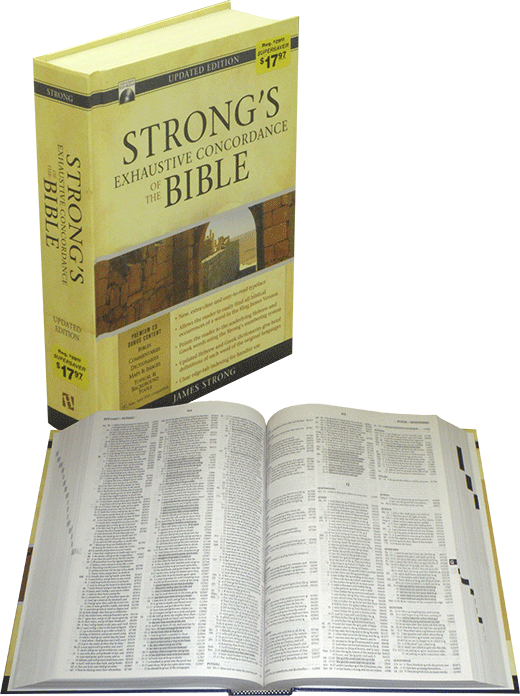
- Strong’s Exhaustive Concordance (includes lexicons)
- Young’s Analytical Concordance
- Englishman’s Hebrew‑Chaldee Concordance of the Old Testament
- Englishman’s Greek Concordance of the New Testament
- Cruden’s
- On‑Line Bible (Free Software for Computers) and various phone apps
USING A LEXICON:
l. Its principal use is for looking up definitions
2. It provides insight into how else the given word is used
Recommendations:
- Strong’s
- Young’s
- Gesenius’ Hebrew‑Chaldee Lexicon of the Old Testament
- Thayer’s Greek‑English Lexicon of the New Testament
WHEN HEBREW & GREEK MAKE A DIFFERENCE:
1. Genesis 6:14 ‑
“Make thee an ark of gopher wood; rooms shalt thou make in the ark, and shalt pitch it within and without with pitch.”
There are two different words for “pitch.” According to Strong’s concordance, the first occurrence is #3722 and the second one is #3724. Looking it up in Strong’s Lexicon we have:
3722 ‑ kaphar, kaw‑far’; a prim. root; to cover (spec. with bitumen); fig. to expiate or condone, to placate or cancel: -appease, make (an) atonement, cleanse, disannul, forgive, be merciful, pacify, pardon, purge (away), put off, (make) reconcile (‑liation).
3724 ‑ kopher, ko’‑fer; from 3722; prop. a cover, i.e. (lit.) a village (as covered in); (spec.) bitumen (as used for coating), and the henna plant (as used for dyeing); fig. a redemption price:‑ bribe, camphire, pitch, ransom, satisfaction, sum of money, village.
2. John 21:15-17 ‑
“So when they had eaten breakfast, Jesus said to Simon Peter, “Simon, son of Jonah, do you love <agapao> Me more than these?” He said to Him, “Yes, Lord; You know that I love <phileo> You.” He said to him, “Feed My lambs.”
He said to him again a second time, “Simon, son of Jonah, do you love <agapao> Me?” He said to Him, “Yes, Lord; You know that I love <phileo> You.” He said to him, “Tend My sheep.”
He said to him the third time, “Simon, son of Jonah, do you love <phileo> Me?” Peter was grieved because He said to him the third time, “Do you love <phileo> Me?” And he said to Him, “Lord, You know all things; You know that I love <phileo> You.” Jesus said to him, “Feed My sheep.”
Two different words are used for “love” in this passage. Christ uses one and Peter another. Christ uses #25 and Peter #5368. Looking it up in Strong’s Concordance we have:
25 ‑ agapao, ag‑ap‑ah’‑o; perh. from agan (much) [or comp. 5689]; to love (in a social or moral sense):‑ (be‑) love (ed). Comp. 5368 à For example: John 3:16 “For God so LOVED…
5368 ‑ phileo, fil’‑eh’‑o; from 5384; to be a friend to (fond of [an individual or an object]), i.e. have affection for (denoting personal attachment, as a matter of sentiment or feeling; while 25 is under, embracing espec. the judgment and the deliberate assent of the will as a matter of principle, duty and propriety: the two thus stand related very much as 2309 and 1014, or as 2372 and 3563 respectively; the former being chiefly of the heart and the latter of the head); spec. to kiss (as a mark of tenderness):- kiss, love. à For example: Romans 12:10 Be kindly affectioned <philostorgos> one to another with brotherly love; <philadelphia>
| Overview of the Books of the Bible (Part 3) |
I & II Kings
Author: Not known for certain
Time: 1000 ‑ 586 B.C.
Summary: In the original Jewish texts, these books were regarded as one book. The two books contain the history of the Jewish monarchy from the death of David (around 970 B.C.) to the Babylonian exile (586 B.C.). They trace the division of the Jewish nation into the Kingdom of Judah in the south and the Kingdom of Israel in the north. I & II Kings record Israel’s history from a religious, rather than a civil, viewpoint. As such, it records the religious progress of the nation and sets forth the various steps in the moral growth and decay of the kingdom. I Kings opens with Israel in its glory, and II Kings closes with Israel in ruins. The purpose of the Book of Kings is to record the lives and characters of the nation’s leaders as a warning and exhortation to all subsequent generations of covenant bearers.
THE UNITED KINGDOM FROM SOLOMON TO REHOBOAM ‑
I Kings 1:1 ‑ 11:43
1. Solomon’s ascension to the throne ‑ Ch. 1:1 ‑ 2:46
2. The wisdom and wealth of Solomon ‑ Ch. 3:1 ‑ 4:34
3. Solomon’s building activity‑ Ch. 5:1 ‑ 9:28
4. The Golden Age of Solomon‑ Ch. 10:1‑29
5. Solomon’s apostasy, decline, and death ‑ Ch. 11:1‑43
THE DIVIDED KINGDOM, FROM REHOBOAM TO THE FALL OF THE NORTHERN KINGDOM OF ISRAEL ‑ I Kings 12:1 ‑ II Kings 17:41
1. Early antagonism between Israel and Judah, from Jeroboam to Omri ‑
Ch. 12:1 ‑ 16:28
2. From Ahab to the ascension of Jehu ‑ I Kings 16:29 ‑ II Kings 9:10
3. From Jehu to the destruction of Israel ‑ Ch. 9:11 ‑ 17:41
THE KINGDOM IN JUDAH TO THE FINAL DESTRUCTION OF THE SOUTHERN KINGDOM OF JUDAH ‑ II Kings 18:1 ‑ 25:30
1. The kingdom under Hezekiah ‑ Ch. 18:1 ‑ 20:21
2. The reigns of Manasseh and Amon ‑ Ch. 21:1‑26
3. Reform in Judah and Israel under Josiah ‑ Ch. 22:1‑23:30
4. The last days of Judah ‑ Ch. 23:31 ‑ 25:26
5. Epilogue ‑ The release of Johoiachin ‑ Ch. 25:27‑30
I & II Chronicles
Author: Ezra
Time: 1050-536 B.C.
Summary: Like the Book of Kings, I & II Chronicles were originally one book according to Jewish tradition. However, the Chronicles are not simply a repeat of the history already recorded in the books of Samuel and Kings. The Book of Chronicles was written to remind the nation of their entire history, and of their position among other nations, emphasizing the history of priestly worship from the death of Saul to the end of the Babylonian captivity. The Chronicles contain more detail on the organization of public worship, of religious ceremonies, of Levites and singers, and of the relationship of Kings to the worship of God, than does the Book of Kings. The history of the Northern Kingdom is omitted from the Chronicles because the Northern Kingdom had no bearing on the development of True Worship of God in Jerusalem.
GENEALOGIES ‑ Chapter 1:1 ‑ 9:44
1. Patriarchs ‑ Ch. 1:1‑54
2. Judah‑ Ch. 2:1 ‑ 4:23
3. Simeon‑ Ch. 4:24‑43
4. Tribes east of the Jordan River ‑ Ch. 5:1‑26
5. Levi‑ Ch. 6:1‑81
6. Six other tribes ‑ Ch. 7:1 ‑ 8:40; 9:35‑44
7. Jerusalem’s inhabitants ‑ Ch. 9:1‑34
THE REIGN OF DAVID ‑ Chapter 10:1 ‑ 29:30
1. Background: the death of Saul ‑ Ch. 10:1‑14
2. David’s rise ‑ Ch. 11:1 ‑ 20:8
3. David’s latter days ‑ Ch. 21:1 ‑ 29:30
THE REIGN OF SOLOMON ‑ II Chronicles 1:1 ‑ 9:31
1. Solomon’s inauguration ‑ Ch. 1:1‑17
2. Solomon’s Temple ‑ Ch. 2:1 ‑ 7:22
3. Solomon’s kingdom ‑ Ch. 8:1 ‑ 9:31
THE KINGDOM OF JUDAH ‑ Chapter 10:1 ‑ 36:23
1. The division of the kingdom ‑ Ch. 10:1 ‑ 11:23
2. The rulers of Judah‑ Ch. 12:1 – 36:16
Rehoboam‑ Ch. 12:1‑16
Abijah‑ Ch. 13:1‑22
Asa ‑ Ch. 14:1‑16:14
Jehoshaphat‑ Ch. 17:1‑20:37
Johoram‑ Ch. 21:1‑20
Ahaziah‑ Ch. 22:1‑9
Athaliah ‑ Ch. 22:10‑23:21
Joash ‑ Ch. 24:1‑27
Amaziah‑ Ch. 25:1‑28
Uzziah ‑ Ch. 26:1‑23
Jotham ‑ Ch. 27:1‑9
Ahaz ‑ Ch. 28:1‑27
Hezekiah‑ Ch. 29:1‑32:33
Manasseh ‑ Ch. 33:1‑20
Amon ‑ Ch. 33:21‑25
Josiah ‑ Ch. 34:1‑35:27
Johoahaz, Jehoiakim, Jehoiachin, and Zedekiah ‑ Ch. 36:1‑16
3. The Exile ‑ Ch. 36:17-23
Proverbs
Author: Solomon and others
Time: 1000‑700 B.C.
Summary: In the book of Proverbs, wisdom is the attitude which puts God first as man’s rightful guide and master. The book does not hesitate to link good and bad with reward and penalty. Much can be learned by testing personal conduct against the positive and negative standards and warnings as recorded in the Proverbs. Throughout the book, the view is set forth that all men fall into two basic classes. Both are known by their habits, their deeds, their “fruits”, their chosen “ways” in life, and their fitting ends. They are either with God or without Him, good or evil, or wise or foolish. There is even a mutual tension between the two classes, the two ways of life, which shows up in every aspect of life.
SUPERIORITY OF THE WAY OF WISDOM ‑ Chapter 1:1 ‑ 9:18
1. Introduction‑ Ch. 1:1‑7
2. The righteous woman, Wisdom, versus the evil woman ‑ Ch. 1:8 ‑ 9:18
MAIN COLLECTION OF SOLOMON’S PROVERBS ‑ Chapter 10:1‑22:16
1. Contrasting proverbs ‑ Ch. 10:1 ‑ 15:33
2. Proverbs largely parallel ‑ Ch. 16:1 ‑ 22:16
THE WORDS OF THE WISE, THIRTY SAYINGS ‑ Chapter 22:17‑24:22
1. Sayings paralleled in Egyptian Wisdom ‑ Ch. 22:17 ‑ 23:12
2. Sayings with no parallel in Egyptian Wisdom ‑ Ch. 23:13 ‑ 24:22
THE WORDS OF THE WISE, APPENDIX ‑ Chapter 24:23‑34
PROVERBS OF SOLOMON, COMPILED BY HEZEKIAH’S MEN ‑ Chapter 25:1 ‑ 29:27
FINAL APPENDICES ‑ Chapter 30:1‑31:31
1. The Words of Agur‑ Ch. 30:1‑33
2. The Words of Lemuel ‑ Ch. 31:1‑9
3. Alphabetical poem on the virtuous woman ‑ Ch. 31:10‑31
Ecclesiastes
Author: Solomon
Time: 960 B.C.
Summary: Ecclesiastes is the final book in the “wisdom literature”. The name Ecclesiastes comes from the root meaning “to assemble together.” As such, the book forms a collection of many wise sayings and proverbs of Solomon. The book is mainly comprised of observations of life. Solomon, having lived a full life with all its pleasures, concludes that life is vanity. What better man to speak about life than a man who was given all it had to offer. Without God, life would be meaningless. All his worldly possessions would amount to nothing. Therefore, the conclusion of his studies states that man should love and fear God and obey his commandments.
1. The Futility of All Human Endeavors ‑ Ch. 1:1‑11
2. The Test of Practical Experience ‑ Ch. 1:12 ‑ 2:26
3. Men’s Opportunity Limited by Time ‑ Ch. 3:1‑22
4. Human Vanity Greatly Increased by Oppression ‑ Ch. 4:1‑16
5. Vanity in Insincere Worship ‑ Ch. 5:1‑9
6. Vanity of Riches ‑ Ch. 5:10 ‑ 6:2
7. Vanity of Human Desires ‑ Ch. 6:3 ‑ 11:6
8. Advice and Warning to Youth ‑ Ch. 11:7 ‑ 12:8
9. Conclusion‑ Ch. 12:9‑14
Song of Solomon
Author: Solomon
Time: about 960 B.C.
Summary: Its content includes speeches in Hebrew poetry. It depicts the beauty and pure love between a man and a woman which develops into a mature undying relationship. More in‑depth symbolism shows the relationship between Christ and his bride, the body of believers, which will be consummated at his return. The basic message is the purity and sacredness of love.
PART ONE: THE BRIDE SELECTED FROM ISRAEL‑ Chapter 1:1 ‑ 5:1
1. Song 1: The ardent love and becoming humility of the bride ‑ Ch. 1:1‑8
2. Song 2: Love’s communion and self‑sacrificing devotion ‑ Ch. 1:9 ‑ 2:7
3. Song 3: Signs of his coming ‑ Ch. 2:8‑17
4. Song 4: His sudden appearance ‑ Ch. 3:1‑5
5. Song 5: The splendor of the marriage ‑ Ch. 3:6 ‑ 4:7
6. Song 6: Entering the inheritance ‑ Ch. 4:8 ‑ 5:1
PART TWO: THE BRIDE SELECTED FROM THE GENTILES ‑ Chapter 5:2 ‑ 8:14
1. Song 7: The first advent call and espousal of the bride ‑ Ch. 5:2 ‑ 6:10
2. Song 8: Anticipating his coming ‑ Ch. 6:11‑13
3. Song 9: The flowing beauty of the bride ‑ Ch. 7:1‑9
4. Song 10: The bride’s deep longing and ardent desire for the groom’s return ‑ Ch. 7:10 ‑ 8:4
5. Song 11: The joy and communion of true marriage ‑ Ch. 8:5‑7
6. Song 12: Love’s labor in the future ‑ Ch. 8:8‑14
Jonah
Author: Jonah
Time: 775-760 B.C.
Summary: The book is concerned with the commission of Jonah to warn the city of Nineveh (capital of Assyria) to repent and obey God’s commandments to avoid assured destruction. Jonah is reluctant to preach this message and is therefore swallowed by a great fish and remains in the belly of the fish for three days. Upon his release, he preaches the message to the people of Nineveh who believe his message and repent of their sins.
FLEEING ‑ Chapter 1:1‑17
1. The Lord’s Command ‑ Ch. 1:1‑2
2. A ship to Tarshish ‑ Ch. 1:3
3. A storm at sea ‑ Ch. 1:4‑14
4. Cast overboard ‑ Ch. 1:15‑17
PRAYING ‑ Chapter 2:1‑10
1. Cast out‑ Ch. 2:1‑4
2. Brought up ‑ Ch. 2:5‑6
3. Paying vows ‑ Ch. 2:7‑9
4. Delivered ‑ Ch. 2:10
PREACHING ‑ Chapter 3:1‑10
1. The Lord’s second command ‑ Ch. 3:1‑2
2. Declaring the message ‑ Ch. 3:3‑4
3. Nineveh’s repentance‑ Ch. 3:5‑9
4. Judgment withheld ‑ Ch. 3:10
LEARNING ‑ Chapter 4:1‑11
1. Complaint‑ Ch. 4:1‑3
2. The gourd and the worm‑ Ch. 4:4‑7
3. The wind and the sun ‑ Ch. 4:8
4. The lesson‑ Ch. 4:9‑11
Amos
Author: Amos
Time: 765-750 B.C.
Summary: The book of Amos was written during a period of national optimism in Israel. King Jeroboam II was ruler, and politically and materially the northern kingdom rivaled the age of Solomon and David. Amos, a shepherd by trade, was called by God to pronounce judgment on the northern kingdom of Israel by denouncing Israel’s luxurious living, idolatry, and moral depravity. Amos urges the people to repent before the judgments of God came upon them. “Seek God and live” was Amos’ plea to the nation. He also foretells of the dispersion of the Israelites, but points to a day when God would regather them in the land of their forefathers.
JUDGEMENTS AGAINST THE NATIONS ‑ Chapter 1:1 ‑ 2:16
1. Superscription and proclamation ‑ Ch. 1:1‑2
2. Indictment of neighboring nations ‑ Ch. 1:3 ‑ 2:3
3. Indictment of Judah ‑ Ch. 2:4‑5
4. Indictment of Israel ‑ Ch. 2:6‑16
THREE DISCOURSES AGAINST ISRAEL‑ Chapter 3:1 – 6:14
1. A declaration of judgment‑ Ch. 3:1‑15
2. The depravity of Israel ‑ Ch. 4:1‑13
3. A lamentation for Israel’s sin and doom ‑ Ch. 5:1 ‑ 6:14
FIVE VISIONS OF ISRAEL’S CONDITION ‑ Chapter 7:1 ‑ 9:10
1. The devouring locusts ‑ Ch. 7:1‑3
2. The flaming fire ‑ Ch. 7:4-6
3. The plumb line ‑ Ch. 7:7‑17
4. The basket of ripe fruit‑ Ch. 8:1‑14
5. The judgment of the Lord ‑ Ch. 9:1‑10
THE PROMISE OF ISRAEL’S RESTORATION ‑ Chapter 9:11‑15
Hosea
Author: Hosea
Time: 755-710 B.C.
Summary: The book of Hosea describes the patient long‑suffering of God towards the rebellious and unfaithful northern kingdom of Israel. However, it is made clear to the Israelites that punishment will engulf anyone who remains willfully rebellious. A key theme is Hosea’s marriage to the unfaithful Gomer, who is a symbolic representation of Israel.
THE PROPHET’S MARRIED LIFE ‑ Chapter 1:1 ‑ 3:5
1. His marriage to Gomer‑ Ch. 1:1‑9
2. A message of hope ‑ Ch. 1:10‑11
3. Judgment on faithless Israel ‑ Ch. 2:1‑13
4. The restoration of faithless Israel ‑ Ch. 2:14‑23
5. Hosea’s redemption of his faithless wife ‑ Ch. 3:1‑5
ISRAEL’S UNFAITHFULNESS AND CONSEQUENT JUDGMENT ‑ Chapter 4:1 ‑ 13:16
1. The guilt of the people ‑ Ch. 4:1‑3
2. The guilt of the priests ‑ Ch. 4:4‑8
3. Punishment for all ‑ Ch. 4:9‑10
4. Immoral cult practices ‑ Ch. 4:11‑19
5. Judgment on kings and priests for leading the people astray ‑ Ch. 5:1‑7
6. Disastrous foreign policies of Ephraim and Judah ‑ Ch. 5:8‑15
7. Israel’s plea and God’s rejoinder‑ Ch. 6:1‑6
8. The crimes of Israel ‑ Ch. 6:7 ‑ 7:7
9. Israel’s disastrous foreign policy‑ Ch. 7:8 ‑ 8:3
10. Israel’s idolatry and wicked alliances ‑ Ch. 8:4-14
11. The exile of Israel foretold ‑ Ch. 9:1‑9
12. Israel’s ancient apostasy at Baal‑peor ‑ Ch. 9:10‑14
13. Israel’s apostasy at Gilgal ‑ Ch. 9:15‑17
14. Destruction of the Baal cult prophesied ‑ Ch. 10:1‑8
15. The sin at Gibeah ‑ Ch. 10:9‑10
16. The ruin of Israel ‑ Ch. 10:11‑15
17. God’s love; Israel’s ingratitude ‑ Ch. 11:1‑7
18. God’s pity for his people ‑ Ch. 11:8‑11
19. The sins of Jacob ‑ Ch. 11:12 ‑ 12:14
20. The wicked bull worship ‑ Ch. 13:1‑3
21. The gracious God to bring destruction‑ Ch. 13:4‑11
22. Inescapable ruin‑ Ch. 13:12‑16
ISRAEL’S CONVERSION AND RENEWAL‑ Chapter 14:1‑9
1. The call to repentance ‑ Ch. 14:1‑3
2. The promise of pardon ‑ Ch. 14:4-8
3. A parting admonition ‑ Ch. 14:9
Isaiah
Author: Isaiah
Time: 740-690 B.C.
Summary: Isaiah ministered during the rule of Uzziah, Jotham, Ahaz and Hezekiah. His primary focus dealt with the coming judgment on the Southern Kingdom of Judah due to its great wickedness. Isaiah identified the root of Judah’s trouble in its idolatry and apostasy. Although he spoke of judgments on other nations as well, the prophet Isaiah urged the kings and the people to put their trust in God rather than in alliances with earthly powers. He comforted his people with the realization that God loves those who are faithful to Him and keep His commandments. He spoke of the future Messiah who would come to redeem the nation and restore the Kingdom.
REBUKE AND PROMISE‑ Chapter 1:1 ‑ 6:13
1. Rebellion confronted with judgment and grace ‑ Ch. 1:1‑31
2. Punishment for sin as preparation for glory ‑ Ch. 2:1 ‑ 4:6
3. Judgment and exile in store for Israel ‑ Ch. 5:1‑30
4. The prophet cleansed and commissioned by God ‑ Ch. 6:1‑13
IMMANUEL ‑ Chapter 7:1 ‑ 12:6
1. Immanuel rejected by worldly wisdom‑ Ch. 7:1‑25
2. Messianic deliverance foreshadowed ‑ Ch. 8:1 ‑ 9:7
3. Boastful Samaria doomed to exile ‑ Ch. 9:8 ‑ 10:4
4. World empire crushed; glorious empire to come ‑ Ch. 10:5 ‑ 12:6
BURDENS OF JUDGMENT UPON THE NATIONS ‑ Chapter 13:1 ‑ 23:18
1. Fall of Babylon; her king’s descent into Hades ‑ Ch. 13:1 ‑ 14:27
2. Downfall of Philistia ‑ Ch. 14:28‑32
3. Downfall of Moab ‑ Ch. 15:1 ‑ 16:14
4. Downfall of Damascus and Samaria ‑ Ch. 17:1‑14
5. Downfall and conversion of Ethiopia ‑ Ch. 18:1‑7
6. Afflictions of Egypt ‑ Ch . 19:1 ‑ 20:6
7. Babylon to be conquered and her idols destroyed ‑ Ch. 21:1‑10
8. Defeat for Edom; victory for Israel ‑ Ch. 21:11‑12
9. Dedan and Kedar to be routed ‑ Ch. 21:13‑17
10. Fall of Jerusalem foreseen; Eliakim to replace Shebna ‑ Ch. 22:1‑25
11. Downfall and enslavement of Tyre ‑ Ch. 23:1‑18
GENERAL REBUKE AND PROMISE, I ‑ Chapter 24:1 ‑ 27:13
1. Universal judgment upon universal sin ‑ Ch. 24:1‑23
2. God praised as deliverer and comforter of Zion ‑ Ch. 25:1‑12
3. Song of joy over Judah’s consolation ‑ Ch. 26:1‑21
4. Oppressors to be punished but God’s people preserved ‑ Ch. 27:1‑13
WOES UPON THE UNBELIEVERS OF ISRAEL‑ Chapter 28:1 ‑ 33:24
1. Judgment of Ephraimite drunkards and Jewish scoffers ‑ Ch. 28:1‑29
2. Disaster ahead for hypocrites ‑ Ch. 29:1‑24
3. Confidence in Egypt versus confidence in God ‑ Ch. 30:1‑33
4. God, not Egypt, to be Jerusalem’s defense ‑ Ch. 31:1‑9
5. Israel’s final deliverance, and her spiritual renewal ‑ Ch. 32:1‑20
6. Punishment of the Treacherous, and Triumph of Christ ‑ Ch. 33:1‑24
GENERAL REBUKE AND PROMISE, II ‑ Chapter 34:1 ‑ 35:10
1. Utter destruction of Gentile world powers ‑ Ch. 34:1‑17
2. Blessing on the way of holiness ‑ Ch. 35:1‑10
THE VOLUME OF HEZEKIAH ‑ Chapter 36:1 ‑ 39:8
1. Destruction of Judah averted ‑ Ch. 36:1 ‑ 37:38
2. Destruction of Judah’s king averted ‑ Ch. 38:1 ‑ 39:8
THE VOLUME OF COMFORT ‑ Chapter 40:1 ‑ 66:24
1. The Purpose of Peace ‑ Ch. 40:1 ‑ 48:22
2. The Prince of Peace ‑ Ch. 49:1 ‑ 57:21
3. The Program of Peace ‑ Ch. 58:1 ‑ 66:24
Micah
Author: Micah
Time: 735-700 B.C.
Summary: Micah, who was contemporary with Isaiah, was to the Southern Kingdom of Judah what Amos was previously to the Northern Kingdom of Israel. Both were fierce critics of the rich and powerful who exploited the poor. Though Micah’s prophecies refer especially to Judah, they concerned all of Israel. Micah’s leading ideas are the regeneration of Israel’s remnant through judgment, the establishment of the Kingdom of God in the line of David, and the conversion of the nations through that kingdom. The conclusion of his prophecy is a triumphant expression of faith, which is seen in its true quality against the background of the materialism and the corruption of the reign of Ahaz.
SUPERSCRIPTION ‑ Chapter 1:1
APPROACHING JUDGMENT OF ISRAEL AND JUDAH BECAUSE OF PERSISTENT SIN –
Chapter 1:2‑16
1. The call to attention‑ Ch. 1:2
2. Terrible coming of God announced and described ‑ Ch. 1:3‑4
3. Sins of the capital city representative of those of the nation ‑ Ch. 1:5
4. Fearful consequences of this judgment‑ Ch. 1:6‑7
5. The prophet’s reaction and his vision of this judgment‑ Ch. 1:8‑16
DOOM OF CORRUPT OPPRESSORS AND FALSE PROPHETS ‑ Chapter 2:1 ‑ 3:12
1. Woe upon the land monopolizers ‑ Ch. 2:1‑5
2. False preaching of lying prophets ‑ Ch. 2:6‑13
3. Denunciation of the leaders of the people ‑ Ch. 3:1‑7
4. Micah’s consciousness of power from the Spirit of God ‑ Ch. 3:8
5. Gross sin and crime to bring destruction upon Jerusalem ‑ Ch. 3:9‑12
VISION OF HOPE FROM THE COMING ONE ‑ Chapter 4:1 ‑ 5:15
1. Final triumph of Jerusalem ‑ Ch. 4:1 ‑ 5:1
2. Coming mighty leader to be born in Bethlehem and to restore the remnant of Jacob ‑ Ch. 5:2‑15
THE LORD’S CASE AGAINST ISRAEL ‑ Chapter 6:1 ‑ 7:20
1. First complaint of God ‑ Ch. 6:1‑5
2. Israel’s first reply‑ Ch. 6:6‑8
3. Second complaint of God ‑ Ch. 6:9‑16
4. Israel’s second reply‑ a confession of sin‑ Ch. 7:1‑10
5. Israel’s promised blessing to follow judgment ‑ Ch. 7:11‑13
6. Final plea for Israel ‑ gathered from many nations ‑ Ch. 7:14-17
7. Doxology: The triumph of grace ‑ Ch. 7:18‑20
Nahum
Author: Nahum
Time: 620 B.C.
Summary: The book of Nahum was written approximately 140 years after the recorded events in the book of Jonah. During that period, Nineveh had turned from its repentant attitude and had taken the Northern Kingdom of Israel into captivity. Whereas Jonah proclaimed a message of mercy and repentance, Nahum proclaimed an indictment of doom upon Nineveh, the capital of Assyria. They who were once used as God’s tool against the people of Israel and Jerusalem, would now be destroyed because of their great wickedness.
NINEVEH’S DOOM DECLARED ‑ Chapter 1:1‑15
1. Character of Nineveh’s Judge ‑ Ch. 1:1‑8
2. Declaration of Nineveh’s Doom ‑ Ch. 1:9‑11
3. Comfort to Nineveh’s Oppressed ‑ Ch. 1:12‑15
NINEVEH’S DOOM DESCRIBED ‑ Chapter 2:1‑13
1. City Besieged ‑ Ch. 2:1‑5
2. City Overwhelmed ‑ Ch. 2:6‑10
3. City Made Desolate ‑ Ch. 2:11‑13
NINEVEH’S DOOM DESERVED ‑ Chapter 3:1‑19
1. Cause of the Overthrow ‑ Ch. 3:1‑5
2. Lesson of the Overthrow ‑ Ch. 3:6‑13
3. Certainty of the Overthrow ‑ Ch. 3:14-19
| Terminology (Part 2) |
CIRCUMCISION ‑ cutting off the fold of skin (foreskin) of all Jewish males.
“And ye shall circumcise the flesh of your foreskin; and it shall be a token of the covenant betwixt me and you. ” (Genesis 17:11)
PHARISEE ‑The Pharisees were a religious party or school among the Jews at the time of Christ. The word means “separated”. The fundamental principle of the Pharisees is that by the side of the written law there was an oral law to complete and to explain the written law. It was given to Moses on Mount Sinai and transmitted by him by word of mouth. The first portion of the Talmud, called the Mishna or “second law”, contains this oral law. It is a digest of the Jewish traditions and rituals and was esteemed far above the written law.
“Woe unto you, scribes and Pharisees, hypocrites! for ye devour widows’ houses, and for a pretence make long prayer. ” (Matt. 23:14)
SADDUCEE ‑ The Sadducees, meaning “the righteous”, were a religious party among the Jews at the time of Christ. They denied that the oral law was a revelation of God to the Israelites, and deemed the written law of Moses alone to be obligatory on the nation, as the divine authority.
“For the Sadducees say that there is no resurrection, neither angel, nor spirit: but the Pharisees confess both. ” (Acts 23:8)
SCRIBE ‑ a clerk, especially a public servant, secretary, recorder, whose office and influence differed in different time periods. A religious teacher.
“Then took Jeremiah another roll, and gave it to Baruch the scribe, the son of Neriah; who wrote therein from the mouth of Jeremiah all the words of the book which Jehoiakim king of Judah had burned in the fire: and there were added besides unto them many like words. ” (Jeremiah 36:32)
PRIEST ‑ Male descendant of Aaron of the tribe of Levi, who performed the necessary duties within the tabernacle as laid out in the Levitical Law. In a wider sense, a priest is one who performs the role of a teacher, judge and mediator.
“But his inwards and his legs shall he wash in water: and the priest shall burn all on the altar, to be a burnt sacrifice, an offering made by fire, of a sweet savour unto the LORD. ” (Leviticus 1:9)
SACRIFICE ‑ to slaughter, kill; metaphorically anything offered to God
“I beseech you therefore brethren, by the mercies of God, that ye present your bodies a living sacrifice, holy, acceptable unto God, which is your reasonable service. ” (Romans 12:1)
TABERNACLE ‑ dwelling place, tent, portable temple of worship
“Moreover thou shalt make the tabernacle with ten curtains of fine twined linen, and blue, and purple, and scarlet: with cherubims of cunning work shalt thou make them. “
(Exodus 26:1)
“And I heard a great voice out of heaven saying, Behold, the tabernacle of God is with men, and he will dwell with them, and they shall be his people, and God himself shall be with them, and be their God. ” (Revelation 21:3)
TEMPLE ‑ sanctuary, place of worship
“So Hannah rose up after they had eaten in Shiloh, and after they had drunk. Now Eli the priest sat upon a seat by a post of the temple of the LORD. ” (I Samuel 1:9)
SIN ‑ to miss the mark. Disobedience of God’s commandments
“Whosoever committeth sin transgresseth the law: for sin is the transgression of the law. “
(1 John 3:4)
APOSTLE ‑ messenger, one sent
“Whereunto I am ordained a preacher, and an apostle, (I speak the Truth in Christ, and lie not;) a teacher of the Gentiles in faith and verity.” (1 Timothy 2: 7)
DISCIPLE ‑ a learner, pupil, student
“The disciple is not above his master: but every one that is perfect shall be as his master. ” (Luke 6:40)
REPENT ‑ to be sorry, to turn away from (sin)
“therefore I will judge you, O house of Israel, every one according to his ways, saith the Lord GOD. Repent, and turn yourselves from all your transgressions; so iniquity shall not be your ruin. ” (Ezekiel 18:30)
RIGHTEOUSNESS
‑ to be spiritually correct, faultless, without blame
“Awake to righteousness and sin not” (1 Cor. 15:34a)
| Using Cross References |
There is no better commentary on the Bible than itself. No source is more appropriate for interpreting God’s Word than God Himself. It is in this area that the use of Cross References can be so valuable.
WHAT IS A CROSS REFERENCE?
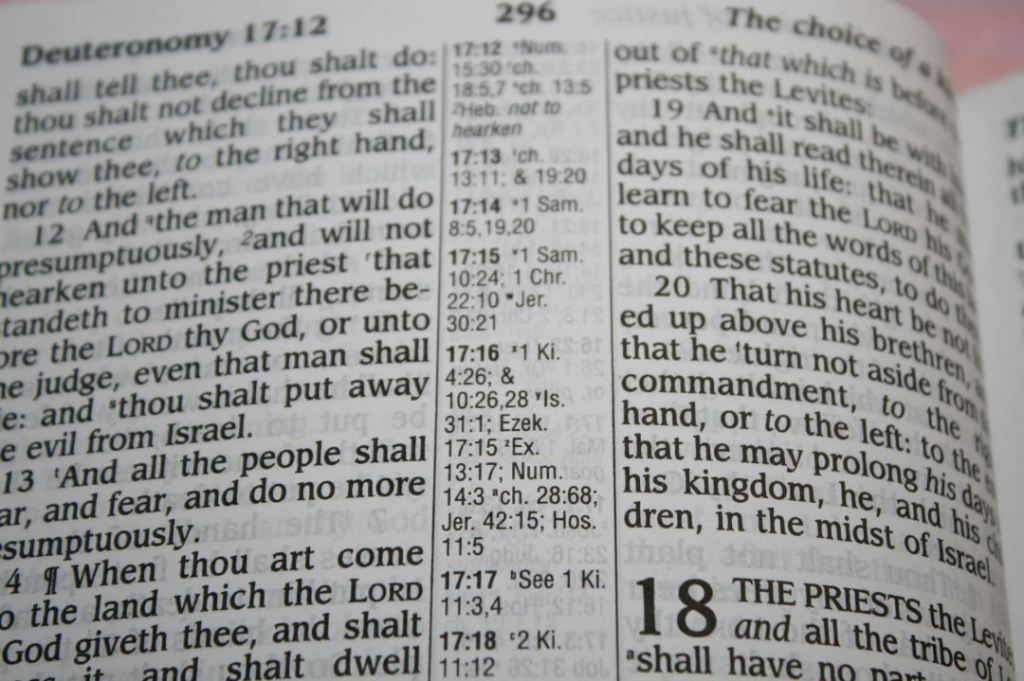
They are verse “references” supplied by the publishers/translators which direct the reader to other locations in the Bible where the same or similar word, event, or phrase may be found.
l. Center References
2. End of Verse/Footnotes
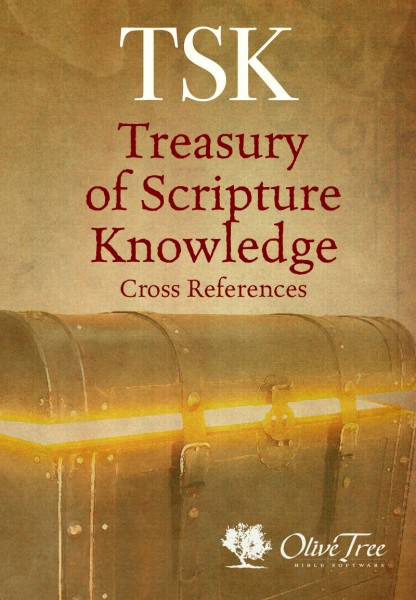
3. Separate books (Treasury of Scripture Knowledge)

USES OF CROSS REFERENCES:
1. Link Teachings/Prophecies Between OT & NT
A. Luke 1:31‑33 ‑ Gabriel’s words to Mary
‑ throne of David
Cross Reference to:
2 Samuel 7:11
B. John 1:19‑28 – Jew’s question to John the Baptist
‑ “Art thou that prophet?”
Cross Reference to:
Deut. 18:15‑18
C. Luke 4:16‑21‑ Christ reading from Isaiah
‑ “the Spirit of the Lord is upon me . . .
Cross Reference to:
Isaiah 61:1,2
Leviticus 25:9-10 (Jubilee)
D. Acts 13:16-37 ‑ Paul speaks to the Jews in Antioch
‑ numerous quotes . . .
Cross References to:
Psalm 2:7
Isaiah 55:3
Psalm 16:10
2. Fill in details on Persons, Places, Subjects, etc.
A. Hebrews 5:6 ‑ Melchizedek ‑ who is he?
Cross References to:
Psalm 110:4
Hebrews 7:17,21
Passage in Hebrews 7 also references:
Genesis 14:18‑20
B. Matthew 12:38‑42 ‑ Queen of the South
‑ who is she?
Cross Reference to:
1 Kings 10:1
C. Acts 1:1‑ The former Treatise
‑ what was it?
Cross Reference to:
Luke 1:3
D. Ezekiel 21:25-27
‑ “whose right it is”
Cross Reference to:
Gen. 49:10
3. Filling in of details of Parallel Accounts
A. History of Kings of Israel & Judah
1. 1 Kings 15:34 ‑ King Baasha
‑ walked in the ways of Jeroboam . . .
Cross References to:
1 Kings 12:28‑29
1 Kings 13:33
1 Kings 14:16
1 Kings 16:2,19,26
2. l Kings 15 :23‑24 ‑ King Asa
‑ diseased in his feet
Cross References to:
2 Chronicles 16:12
3. 1 Kings 22:41-45 ‑ King Jehoshaphat
‑ he made peace with the king of Israel
Cross References to:
2 Chronicles 18:1
2 Chronicles 21:6
2 Chronicles 22:2
2 Kings 8:18
B. Gospel Accounts
1. Luke 21:5‑36 ‑ Mt. Olivet Prophecy
‑ who are the “they” that asked him in v.7?
Cross References to:
Matthew 24:1‑51 (disciples, privately)
Mark 13:1‑37 (in particular, Peter, James,
John, and Andrew, privately)
2. Luke 9:7‑9 ‑ Concerning John the Baptist
‑ John was beheaded by Herod, why?
Cross References to:
Matthew 14:1‑3
Mark 6:14‑16
3. Luke 23:39-43 ‑ Repentant Thief
‑ Thief repents on cross
Cross References to:
Matthew 27:44
Mark 15:29‑30
4. Clarification of Passage/Meaning
A. Matthew 9:10-13 ‑ “Mercy, and not sacrifice
‑ “I will have mercy… “
Cross References to:
Matt. 23:23
Micah 6:8
1 Sam. 15:22
Hosea 6:6
B. Acts 8:27‑40 ‑ Philip and the Eunuch
‑ Reading from Isaiah
Cross Reference to:
Isaiah 53: 7, 8
C. John 4:3‑42 – Preaching to Samaritans
‑ Location (v. 5)
Cross References to:
Genesis 33:19
Joshua 24:32 (note context of chapter 24)
Go To: Study 4 – Critics & The Purpose of God

 The Original Gospel