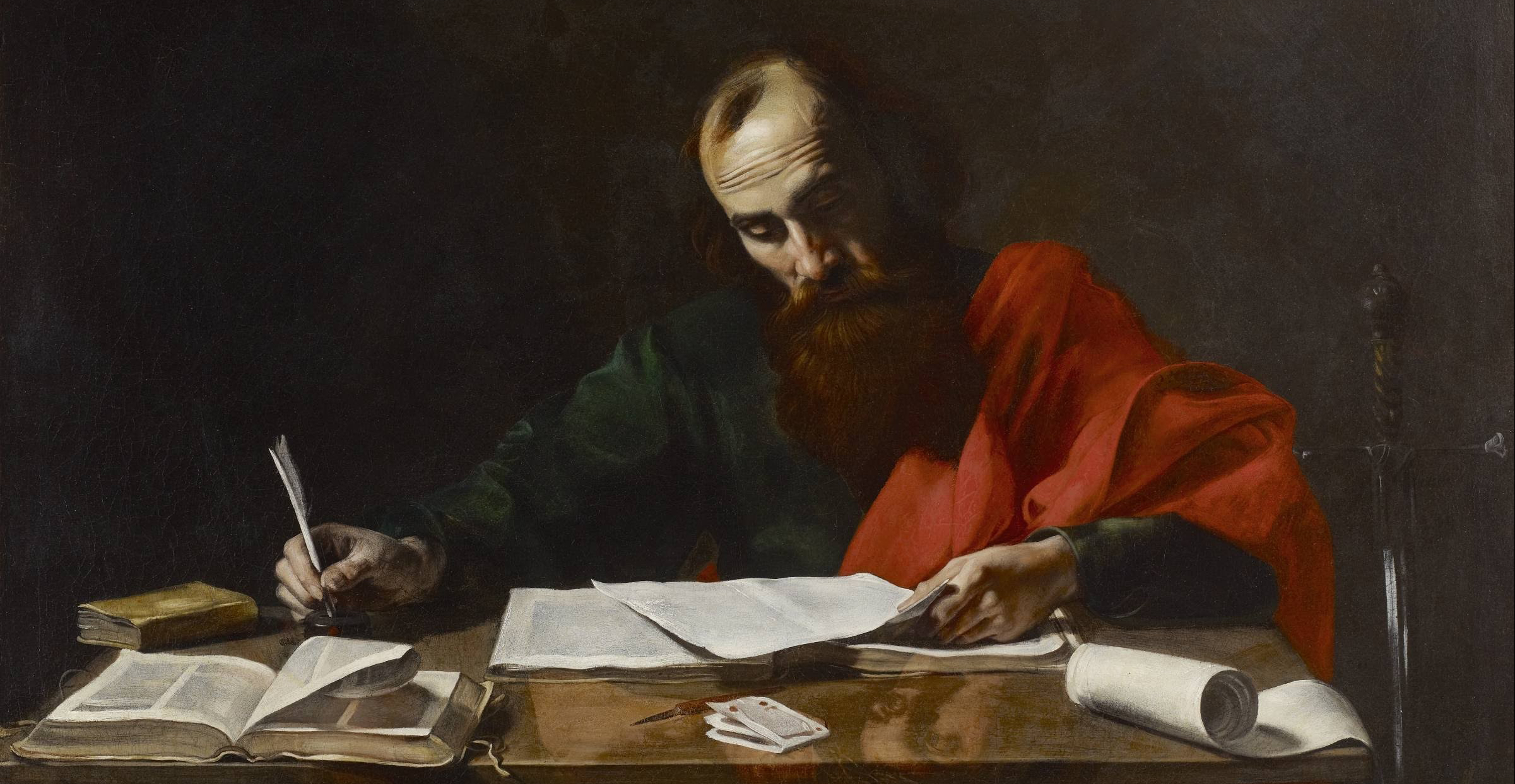

- Life and Death in the Bible
- Overview of the Books of the Bible (Part 6)
- Good vs. Evil
- Terminology (Part 4)
- Conclusion
| Life and Death in the Bible |
WHERE DOES LIFE COME FROM?
The formation of life is outlined for us in the first couple of chapters of the book of Genesis in the account of creation. The verse to note especially is found in Genesis 2:7…
“The LORD God formed man of the dust of the ground, and breathed into his nostrils the breath of life; and man became a living soul.”
A Living Soul/Being = Dust (from the earth) + Breath of Life (from God)

Another similar description of “life” can be found in the account of the flood, in Genesis 7:21. Here it describes the living beings which died in the flood.
“All flesh died that moved upon the earth, both of fowl, and of cattle, and of beast, and of every creeping thing that creepeth upon the earth, and every man: All in whose nostrils was the breath of life, of all that was in the dry land, died.”
LIFE -> God supplies it through “the breath of life.”
As studied earlier, the purpose of life is to bring Glory to God.
We recall the passage from Revelation 4:11…
“Thou art worthy, O Lord, to receive glory and honour and power: for thou hast created all things”.
WHERE DID DEATH COME FROM?
Death was not a part of the creation as it was first made. All that God had made was deemed “very good.” However, God did impose one simple law upon Adam and Eve in the garden.
It says in Genesis 2:17…
“But of the tree of the knowledge of good and evil, thou shalt not eat of it: for in the day that thou eatest there of thou shalt surely die.”
That promise was kept following the eating of the fruit by Adam and Eve. The curse of death was pronounced upon them by God in Genesis 3:15‑19. Note especially the end of verse 19 where we have the familiar words, “for dust thou art, and unto dust shalt thou return.”
Though death was not originally part of creation it now passed on to all men. This is brought out in the Apostle Paul’s letter to the Romans in the 5th chapter. Verse 12 says,
“Wherefore, as by one man sin entered into the world, and death by sin; and so death passed upon all men, for that all have sinned:”
And later in verse 18 it says,
“Therefore as by the offence of one judgment came upon all men to condemnation; even so by the righteousness of one the free gift came upon all men unto justification of life.”
Genesis 5 shows that death now reigns because of sin. The persons listed in the generations of Adam are described by the phrase, “and he died. “
Romans 6:23 says,
“For the wages of sin is death; but the gift of God is eternal life through Jesus Christ our Lord. “
SIN -> Death is brought about as a consequence of sin and passes to all mankind.
WHAT HAPPENS AT DEATH?
Throughout the ages mankind has wrestled with this question. Everyone wants to know what lies beyond death. The Bible teaches that death is simply the REVERSAL of life. We turn to the book of Job for further testimony of this fact. Job 33:4 reminds us that life is from God. It says,
“the Spirit of God hath made me, and the breath of the Almighty hath given me life.”
In the next chapter, verse 14 and 15 say,
“If he (God) set his heart upon man, if he gather unto himself his spirit and his breath; All flesh shall perish together, and man shall turn again unto dust.”
See also: Ecclesiastes 12:7; 3:18‑20.
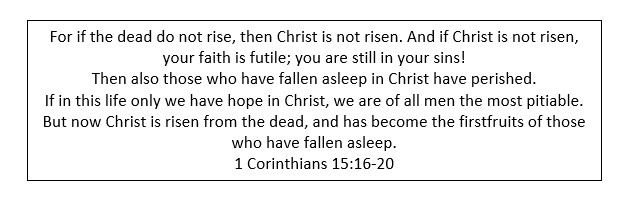
Death likened to sleep: Daniel 12:2; 1 Corinthians 15:18,20; 1 Thessalonians 4:13‑18.
WHAT LIES BEYOND DEATH?
In the prophecy of Daniel, in chapter 12 and verse 2 it is written:
“And many of them that sleep in the dust of the earth shall awake,
some to everlasting life, and some to shame and everlasting contempt. “
The Lord Jesus Christ declared:
“The hour is coming, in the which all that are in the graves shall hear his voice, and shall come forth; they that have done good unto the resurrection of life; and they that have done evil, unto the resurrection of damnation” (John 5:28-29).
And Paul, in his defense before Felix, declared:
“But this I confess unto thee, that after the way which they call heresy, so worship I the God of my fathers, believing all things which are written in the law and in the prophets: And have hope toward God, which they themselves also allow, that there shall be a resurrection of the dead, both of the just and unjust. ” (Acts 24:14‑15)
See also: 1 Corinthians 15 (note argument of verse 12); John 6:39‑40; John 11:23‑27
| Overview of the Books of the Bible (Part 6) |
I & II Timothy
Author: Paul
Time: 67 A.D.
Summary: Both letters were written by Paul from Rome during his imprisonments. Paul gives Timothy encouragement and reminds him of the work at hand. He reveals his fears to Timothy of the dangers within the church and lends advice for godly conduct of all individuals. The two letters to Timothy along with that to Titus are often called the Pastoral letters of Paul.
The Charge: Guard That Which Has Been Committed Unto Thee
Key Verses:
“This charge I commit unto thee, son Timothy… that thou mightest war a good warfare (1 Tim. 1:18).”
“O Timothy, guard that which is committed unto thee (1 Tim. 6:20 ‑ RV)”.
INTRODUCTION ‑ Chapter 1:1‑20
ECCLESIAL CONDUCT‑ Chapter 2:1 ‑ 3:16
ECCLESIAL PROBLEMS ‑ Chapter 4:1‑16
PERSONAL ADMONITION ‑ Chapter 6:11‑21
II Timothy
The Challenge: Stir Up the Gift of God
Key Verses:
“Wherefore I put thee in remembrance that thou stir up the gift of God, which is in thee (II Tim. 1:6).” “The things that thou hast heard of me among many witnesses, the same commit thou to faithful men, who shall be able to teach others also (II Tim. 2:2).”
“Perilous times shall come (II Tim. 3:1).”
“The time of my departure is at hand (II Tim. 4:6).”
HOLD ON TO THE CHARGE ‑ Chapter 1:1‑18
ENCOURAGE OTHERS TO TAKE UP THE CHARGE ‑ Chapter 2:1‑26
GUARD THE CHARGE IN FACE OF APATHY ‑ Chapter 3:1‑17
PREACH THE CHARGE IN ALL SEASONS ‑ Chapter 4:1‑8
PAUL’S FINAL WORDS ‑ Chapter 4:9‑22
Titus
Author: Paul
Time: 67 A.D.
Summary: This letter was written by Paul from Rome to Titus who was teaching to the churches on the island of Crete. The letter provides Titus with instruction and advice for his conduct as well as guidance for dealing with the believers in Crete.
The Caution: What a Church Must Aim For
Key Verse:
“That thou shouldest set in order the things that are wanting (Tit. 1:5). “
AN ORDERLY CHURCH ‑ Chapter 1:1‑16
A SOUND CHURCH‑ Chapter 2:1‑15
A PRACTICAL CHURCH ‑ Chapter 3:1‑15
Philemon
Author: Paul
Time: 61‑62 A.D.
Summary: Paul writes to Philemon whose slave, Onesimus had run away to Rome where he met Paul and became a Christian. Paul sends him back to his rightful owner with his personal letter of recommendation to accept him back with love and charity.
Responsibilities in Christ
Salutation ‑ vv. 1‑3
Paul’s Praise of Philemon ‑ vv. 47
Paul’s Plea for Onesimus ‑ vv 8‑17
Paul’s Pledge of Repayment‑ vv. 18‑22
Final Greetings ‑ vv. 23‑25
Hebrews
Author: Probably Paul
Time: 63 A.D.
Summary: This letter persuasively presents the distinctiveness of Jesus Christ as the Son of God. The letter is primarily written to Jewish Christians who were wavering between Judaism and Christianity. Its primary message was to prove that Jesus Christ was the fulfillment of all O.T. prophecy and symbol. With Christ as the fulfillment, there was no longer a need to make the animal sacrifices, etc. required under the Mosaic Law. Christ is the High Priest and mediator of all believers in all ages who look for the Redemption of God.
Christ: The New and Living Way
Key Verse:
“Having therefore, brethren, boldness to enter into the holiest by the blood of Jesus, by a new and living way, which he hath consecrated for us, through the veil, that is to say, his flesh; and having an high priest over the house of God; let us draw near with a true heart in full assurance of faith, having our hearts sprinkled from an evil conscience, and our bodies washed with pure water. Let us hold fast the profession of our faith without wavering; (for he is faithful that promised); and let us consider one another to provoke unto love and to good works; not forsaking the assembling of ourselves together, as the manner of some is; but exhorting one another: and so much the more, as ye see the day approaching (Heb. 10:19‑25). “
CHRIST THE SON: BETTER THAN HIS PREDECESSORS ‑ Chapter 1:1 ‑ 7:28
A Better Voice Than the Prophets ‑ Ch. 1:1‑3
A Better Name Than the Angels ‑ Ch. 1:4 ‑ 2:18
A Better Apostle Than Moses ‑ Ch. 3:1‑19
A Better Leader Than Joshua ‑ Ch. 4:1‑13
A Better Priest Than Aaron ‑ Ch. 4:14 ‑ 7:28
A Better Priestly Order Than the Levitical ‑ Ch. 7:1‑28
CHRIST THE SACRIFICE: CONFIRMING THE BETTER COVENANT ‑ Chapter 8:1 ‑10:18
1. Christ the antitype of the Mosaic Order ‑ Ch. 8:1‑5
2. Christ the mediator of a better covenant ‑ Ch. 8:6‑13
3. The Mosaic Tabernacle ‑ Ch. 9:1‑5
4. The lessons it taught ‑ Ch. 9:6‑10
5. Christ Provided a better Sanctuary‑ Ch. 9:11‑14
6. Christ Provided a better Sacrifice ‑ Ch. 9:15‑28
7. The limitations of animal sacrifices ‑ Ch. 10:1‑4
8. The effectiveness of Christ’s offering ‑ Ch. 10:5‑10
9. The completeness of his offering‑ Ch. 10:11‑18
CHRIST AND FAITH: THE TRUE AND BETTER WAY ‑ Chapter 10:19 ‑13:25
1. Faith ‑ The True Response ‑ Ch. 10:19‑39
2. Faith ‑ The Moving Power of the Ages ‑ Ch. 11:1‑40
3. Faith Leads Unto Christ‑ Ch. 12:1‑13
4. Faith Expresses Itself in Practical Morality‑ Ch. 12:14‑ 13:21
FINAL WORDS ‑ Chapter 13:22‑25
James
Author: James
Time: A.D. 43‑50
Summary: The letter of James contains practical information pertaining to everyday life as a Christian. It is not directed at any Church in particular, but rather to Jewish believers, revealing their responsibilities to the principles of the Law as manifested in Christ. It focuses on real Faith and shows that there is a need to develop faith as an energizing power that would find its outworking in a changed life; therefore, the epistle dwells on practice and not doctrine.
Faith in Action
Key Verse:
“For as the body without the spirit is dead, so faith without works is dead also (Jas. 2:26). “
HOW FAITH CAN TRIUMPH OVER TRIALS ‑ Chapter 1:1‑27
HOW FAITH CAN GOVERN ACTIONS TOWARDS OTHERS ‑ Chapter 2:1‑26
HOW FAITH CAN DISCIPLINE THE TONGUE ‑ Chapter 3:1‑18
HOW FAITH CAN PURIFY CHARACTER ‑ Chapter 4:1‑17
HOW FAITH CAN CREATE CONFIDENCE IN GOD ‑ Chapter 5:1‑20
I Peter
Author: Peter
Time: 60 A.D.
Summary: This letter was written to Christians in Asia Minor to help establish a joyful hope in the face of coming persecution. Peter sternly warns that persecution would come and that each individual must stand fast against it. He also illustrates man’s relation to God as well as to mankind.
Triumph in Tribulation
INTRODUCTION‑ Chapter 1:1‑2
THE CALL AND WHAT IT INVOLVES ‑ Chapter 1:3 ‑ 2:10
THE PILGRIM LIFE AND HOW TO LIVE IT ‑ Chapter 2:11 ‑ 4:11
THE FIERY TRIAL AND HOW TO BEAR IT ‑ Chapter 4:12 ‑ 5:11
FINAL WORDS ‑ Chapter 5:12‑14
II Peter
Author: Peter
Time: 66 A.D.
Summary: The theme of this letter is true knowledge. The newly formed church was threatened by false teachers and therefore Peter exhorts the Christians to be aware of this danger. Peter explains that false teachers had crept in and were secretly subverting the true doctrine of the Gospel.
The True Knowledge and the Sure Hope
DIVINE REVELATION: THE ANTIDOTE TO MORAL CORRUPTION ‑ Chapter 1:1‑21
DIVINE REVELATION: THE ANTIDOTE TO DOCTRINAL CORRUPTION ‑ Chapter 2:1‑22
DIVINE REVELATION: THE ANTIDOTE TO POLITICAL CORRUPTION ‑ Chapter 3:1‑18
I John
Author: John
Time: 85 ‑100 A.D.
Summary: This letter was written to a community who faced Gnostic heresy. John teaches how to walk in the light and also to keep in their remembrance the sacrifice which the Lord Jesus Christ made for them.
The Truth and The Ecclesia
INTRODUCTION: WHY THE EPISTLE WAS WRITTEN ‑ Chapter 1:1‑4
GOD IS LIGHT‑ Chapter 1:5‑ 2:29
GOD IS LOVE ‑ Chapter 3:1 ‑ 4:21
GOD IS LIFE‑ Chapter 5:1‑21
II John
Author: John
Time: 85 ‑100 A.D.
Summary: The letter is addressed to “an elect lady” who is advised to have minimal fellowship with teachers of error. The ideas of love, truth, and obedience are emphasized.
The Truth and the Home
INTRODUCTION ‑ vv. 1‑4
EXPOSITION ‑ Love Defined ‑ vv. 5‑B
EXHORTATION ‑ vv. 7‑9
APPLICATION ‑ False Charity to be Avoided ‑ vv. 10‑11
INFORMATION ‑ vv. 12‑13
III John
Author: John
Time: 85 ‑100 A.D.
Summary: The letter commends Gaius for his piety and charity by allowing Christian teachers use of his home and financial means. He is urged to receive only good men which were known by their works and to shun evil men.
The Truth and the Individual
GAIUS: THE SINCERE, DEDICATED, LOVABLE ‑ vv. 1‑8
DIOTREPHES: THE DOMINEERING, SELF‑ASSERTIVE, ARROGANT‑ vv. 9‑11
DEMETRIUS: OF GOOD REPUTE TO ALL‑ v. 12
LAST WORDS FROM JOHN ‑ vv. 13‑14
Jude
Author: Jude
Time: 70 ‑ 80 A.D.
Summary: The primary message Jude is trying to relate is the danger of the false teachers who have “slipped in” unawares by the newly converted Christians. Jude further outlines the past judgments upon evil men who forsook the Word of God and perverted it into the traditions of men.
Contending Earnestly for the Faith
INTRODUCTION ‑ vv. 1‑2
THE NEED TO CONTEND ‑ APOSTATE TEACHERS ‑ vv. 3‑16
THE WAY TO CONTEND ‑ AVAILABLE RESOURCES ‑ vv. 17‑25
Revelation
Author: John
Time: 95 A.D.
Summary: This is the final book of the N.T. and the Bible as a whole. John, one of the apostles, is given the Revelation of Jesus Christ pertaining to the future events (AD100 to present) leading up to the return of Christ and the establishment of the Kingdom of God. The vision is highly symbolic and signifies the apostasy of the church as well as the judgments of those who are held accountable.
The Unveiling of the Lord Jesus Christ
Key Verse:
“The Revelation of Jesus Christ, which God gave unto him, to shew unto his servants things which must shortly come to pass; and he sent and signified it by his angel unto his servant John (Rev. 1:1). “
JESUS CHRIST AND THE REDEEMED ‑ Chapter 1:1‑20
JESUS CHRIST AND THE ECCLESIA ‑ Chapter 2:1 ‑ 3:22
JESUS CHRIST AND THE KINGDOM ‑ Chapter 4:1 ‑ 22:21
1. Introduction‑ Ch. 4:1 ‑ 5:14
2. The Seven Seals ‑ Ch. 6:1 ‑ 7:17
3. The Seven Angelic Trumpeters ‑ Ch. 8:1 ‑ 11:19
4. The Development and Destruction of the Beast, His Image and Organization ‑ Ch. 12:1 ‑14:20
5. The Seven Vials of Divine Wrath‑ Ch. 15:1 ‑16:21
6. The Judgment of the Great Whore and Triumph of the Lamb ‑ Ch 17:1 ‑ 20:15
7. New Heavens and New Earth‑ Ch. 21:1 ‑ 22:21
| Good vs. Evil |
ORIGIN OF EVIL
In the Genesis account of creation it says, “God saw everything that he had made, and, behold, it was very good. ” (Gen. 1:31) Elsewhere it is written, “thou (God) didst create all things, and by thy will they existed and were created. “ (Rev. 4:11, RSV)
The Bible is quite clear that evil was not part of creation and was not present at the beginning, but it soon appeared on the scene, as a result of SIN and DISOBEDIANCE.
WHAT IS SIN?
In John’s first epistle he writes, “Everyone who sins breaks the law; in fact, sin is lawlessness.” (1 John 3:4 NIV) The Greek word for lawlessness is “anomia”. It indicates not merely a transgression of a given law, but involves also an attitude of rebellion. In other words, when one defies God either through thought, word, or deed, it is considered sin.
DOES GOD TEMPT ANYONE OR CAUSE THEM TO SIN?
“Let no man say when he is tempted, I am tempted of God: for God cannot be tempted with evil, neither tempteth he any man: But every man is tempted, when he is drawn away of his own lust, and enticed. Then when lust hath conceived, it bringeth forth sin: and sin, when it is finished, bringeth forth death.” (James 1:13‑15)
THE SOURCE OF SIN: Lust and Pride (I John 2:16)
“For all that is in the world, the lust of the flesh, and the lust of the eyes, and the pride of life, is not of the Father, but is of the world. “
| Lusts (1 John 2) | Eve (Genesis 3) | Jesus (Matthew 4) | Antidote (1 Corinthians 13) |
| “lust of the flesh” | “good for food” | “he was hungry” | Hope = Wait, Trust |
| “lust of the eyes” | “pleasant to the eyes” | “saw all the kingdoms” | Faith = See the Invisible |
| “pride of life” | “you shall be like God” | “make a big show – jump off!” | Love = Selfless, not Selfish |
RESULT: Enmity Between Man & God -> Flesh versus Spirit
IS MAN INHERENTLY GOOD or EVIL?
The Bible clearly shows, in each book of the Bible, that man is essentially “evil” by nature. The enmity between man and God has continued throughout the ages.
“The heart is deceitful above all things, and desperately wicked: who can know it?” (Jer. 17:9)
“That which cometh out of the man, that defileth the man. For from within, out of the heart of men, proceed evil thoughts, adulteries, fornications, murders, thefts, covetousness, wickedness, deceit, lasciviousness, an evil eye, blasphemy, pride, foolishness: All these evil things come from within, and defile the man. ” (Mark 7:20‑23).
See also: Gen. 6:5; 8:21; Isaiah 59:1‑8; Rom. 3:10‑12,23
BOTTOM LINE: Man is evil and God is good. Evil may prevail for a season, but ultimately good will prevail according to God’s timetable. Consider the wonderful promise found in Paul’s epistle to the Romans:
“I consider that our present sufferings are not worth comparing with the glory that will be revealed in us. The creation waits in eager expectation for the sons of God to be revealed. For the creation was subjected to frustration, not by its own choice, but by the will of the one who subjected it, in hope that the creation itself will be liberated from its bondage to decay and brought into the glorious freedom of the children of God. (Rom. 8:18‑21, NIV)”
Also, Revelation 21:3‑4 says,
“I heard a great voice out of heaven saying, Behold, the tabernacle of God is with men, and he will dwell with them, and they shall be his people, and God himself shall be with them, and be their God. And God shall wipe away all tears from their eyes; and there shall be no more death, neither sorrow, nor crying neither shall there be any more pain: for the former things are passed away. “
WHY IS THERE SUFFERING?
Sin and suffering are a part of the present state of things, and are not caused by the design or purpose of God, but by the folly of mankind in the very beginning of history ‑ and perpetuated, in many cases, by the foolish actions of an ignorant and disobedient world. Man’s disobedience has introduced into the arena of God’s work the cause of all the suffering, evil, bloodshed, disease, anger, impediments, and inequities that the long and sad history of the world ever since has witnessed. The problems that society faces today - slums, murder, gambling, terrorism, etc. are the products of man’s lusts and folly.
Man continues to be disinterested in heeding the Word of God, and the divine instructions contained therein, and at the same time, continues to wonder at the presence of evil and suffering. Much of the suffering in the world is a direct result of man’s actions. Stress, heart failure, cancer, the increase in mental illness, respiratory ailments due to pollution, and such curses upon humanity as AIDS, bring trauma and distress even to innocent families and communities. Consider the words of “the Preacher” in Ecclesiastes, “…time and chance happeneth to them all” (Ecclesiastes 9:11)
WHY DOESN’T GOD INTERVENE?
God values freewill and obedience SO much that He built it into the very fabric of His creation. That is, He does not want us to be ‘robots’ that serve Him without thinking or choosing, nor does He want ‘slaves’ that serve Him out of fear and compulsion! The result of this is that many people choose NOT to obey God’s word at all – and He knew that would be the case, but allowed it to happen anyway!
It has been well explained using a “Constraint Triangle”. God’s character – righteousness, justice, mercy and truth – demand that He cannot compromise His own principles.

A manufacturer cannot provide you with the BEST quality at the LOWEST price, delivered FAST, you have to pick two!

God is also constrained when it comes to offering eternal life in a perfect world, while allowing freewill. There can be only two!
We see this from the very beginning. In Genesis 2:16-17 God gave Adam and Eve the CHOICE to obey Him or not. “And the LORD God commanded the man, saying, “Of every tree of the garden you may freely eat; but of the tree of the knowledge of good and evil you shall not eat, for in the day that you eat of it you shall surely die.” They had freewill to choose, but their choice would have serious consequences – for them – and all future generations! But the principle remains – and is true for us ALL; we can CHOOSE to serve God, or not. He is not going to force us to obey Him. But the consequences of our choices are real.
Some say God could remove all these dreadful circumstances. Certainly, He could. But if He did so without reason and purpose, providing sinful mankind with every blessing and benefit without restriction, He would never accomplish His ultimate purpose which is to produce a people “for His Name ” (Acts 15:14), and to teach mankind the wisdom of His ways.
Without an understanding of God’s Word, men do not acknowledge divine instruction, and are not prepared to accept God’s teaching. They will not naturally follow the way of righteousness. The evil characteristics of man are the cause of much of humanity’s suffering. A society that throws off the restraint of the Scriptures causes the glaring injustices against its fellows which are so evident today.
The Bible invites us to separate from such a society; to recognize the evil condition of life about us; to acknowledge that we are no longer “very good”, but inherently “desperately wicked”, and therefore to seek for the means to raise ourselves above the hopelessness of sin, and seek for righteousness.
The Bible is the key to such a positive attitude. It clearly shows the way in which men and women can find real satisfaction in life, and obtain answers to the perplexing questions that otherwise seem to have no solution.
IS SUFFERING NECESSARY? WHY DO THE RIGHTEOUS ALSO SUFFER?
The qualities that Almighty God seeks in His creatures, are summed up in Galatians 5:22‑23, “The fruit of the Spirit is love, joy, peace, longsuffering, gentleness, goodness, faith, meekness, temperance. “ These characteristics are not natural to us; they only come by development. Instead, we are born with the selfish desires of flesh. These are uppermost in our consideration, and in most people remain the prime force of their lives.
But God wants to change that, and the means employed are often trial and suffering. Indeed, the Apostle Paul taught that it is “through much tribulation” that believers will “enter the Kingdom of God” (Acts 14:22). God does not exempt His servants from suffering and trials, for it is by such means that they are able to prove their courage and their conviction about the things they believe. Not only so, but it is through difficulties that a person is made stronger in character, more understanding and compassionate, and more faithful in disposition. These are the characteristics with which God is well‑pleased.
The purpose of trials are best summed up in these verses…
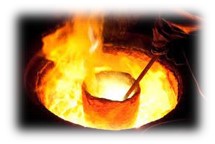
“In this you greatly rejoice, though now for a little while, if need be, you have been grieved by various trials, that the genuineness of your faith, being much more precious than gold that perishes, though it is tested by fire, may be found to praise, honor, and glory at the revelation of Jesus Christ, whom having not seen you love. Though now you do not see Him, yet believing, you rejoice with joy inexpressible and full of glory, receiving the end of your faith–the salvation of your souls. (1Peter 1:6-9)
And, there will be an end of suffering. Those who “by patient continuance in well doing seek for glory and honor and immortality “ will be granted “eternal life ” (Romans 2: 7) ‑ the promise of “divine nature ” (2 Peter 1:4), and the privilege of reigning as “kings and priests” with Jesus Christ (Rev. 5:10) by the grace of God. No more will the weaknesses of human nature be felt; no longer the diseases, distresses and frustrations of life; no longer the realization of increasing age, with all its weaknesses and concerns. The joy of immortality is beautifully expressed in the words of the prophet Isaiah: “They that wait upon the Lord shall renew their strength; they shall mount up with wings as eagles; they shall run, and not be weary; and they shall walk, and not faint” (ch. 40:31).

In the midst of a time of trouble the Psalmist confidently asserted, “One thing have I desired of the Lord, that will I seek after; that I may dwell in the house of the Lord all the days of my life, to behold the beauty of the Lord, and to enquire in His temple. For in the time of trouble He shall hide me in His pavilion: in the secret of His tabernacle shall He hide me; He shall set me up upon a rock” (Psalm 27:4‑5). David knew that whatever trials he was required to face, God would protect him, so that ultimately he might achieve his heart’s desire. So he tells us, “Wait on the Lord: be of good courage, and He shall strengthen thine heart: Wait, I say, on the Lord” (verse 14).
| Terminology (Part 4) |
PRECEPT ‑ Commandment. An order, command, charge
“And Jesus answered and said unto them, For the hardness of your heart he wrote you this precept. ” (Mark 10:5)
STATUTE ‑ A commandment, decree, law, or ordinance
“And ye shall keep it a feast unto the LORD seven days in the year. It shall be a statute for ever in your generations: ye shall celebrate it in the seventh month. ” (Leviticus 23:41)
SABBATH ‑ rest
“For in six days the LORD made heaven and earth, the sea, and all that in them is, and rested the seventh day: wherefore, the LORD blessed the sabbath day, and hallowed it. ” (Exodus 20:11)
TONGUE ‑ A language used by a particular people in distinction from that of other nations.
“Cretes and Arabians, we do hear them speak in our tongues the wonderful works of God. ” (Acts 2:11)
SAINT ‑ Holy one
“Paul, an apostle of Jesus Christ by the will of God, to the saints which are at Ephesus, and to the faithful in Christ Jesus. ” (Ephesians 1:1)
SATAN ‑ adversary, one who withstands; adversary (in general ‑ personal or national)
“But he turned, and said unto Peter, Get thee behind me, Satan: thou art an offence unto me: for thou savourest not the things that be of God, but those that be of men. ” (Matthew 16:23)
DEVIL ‑ prone to slander, slanderous, accusing falsely
“Jesus answered them, Have not I chosen you twelve, and one of you is a devil?”
(John 6: 70)
LUCIFER ‑ means “The morning‑star”, title given the King of Babylon
“How art thou fallen from heaven, O Lucifer, son of the morning! how art thou cut down to the ground, which didst weaken the nations!” (Isaiah 14:12)
GENTILE – A Greek by nationality, whether a native of the mainland or of the Greek islands or colonies. 2) In a wider sense the name embraces all nations not Jews that made the language, customs, and learning of the Greeks their own.
“But glory, honour, and peace, to every man that worketh good, to the Jew first, and also to the Gentile. ” (Romans 2:10)
ANGEL ‑ A messenger, envoy, one who is sent, a messenger from God
“And the angel of the Lord spake unto Philip, saying, Arise, and go toward the south unto the way that goeth down from Jerusalem unto Gaza, which is desert.” (Acts 8:26)
SERAPHIM ‑ Literally, “Burning, fiery.” Specifically, a seraph or symbolic creature.
“Above it stood the seraphims: each one had six wings; with twain he covered his face, and with twain he covered his feet, and with twain he did fly.” (Isaiah 6:2)
CHERUBIM ‑ The cherubs or symbolic figures. Plural of cherub. Not to be confused with angels.
“So he drove out the man; and he placed at the east of the garden of Eden Cherubims, and a flaming sword which turned every way, to keep the way of the tree of life. ” (Genesis 3:24)
| Conclusion |
After the death of Moses, Joshua was set up as the leader of the nation of Israel by God. God told Joshua to “be strong and of a good courage.” He also told him,
“This book of the law shall not depart out of thy mouth; but thou shalt meditate therein day and night, that thou mayest observe to do according to all that is written therein: for then thou shalt make thy way prosperous, and then thou shalt have good success. ” (Josh. 1:8)
Joshua heeded those words and led the people successfully into the land. The words proved true, for Joshua’s way prospered and he had good success. At the end of his life, he gathered all Israel to him and said these words:
“Now therefore fear the LORD, and serve him in sincerity and in truth: and put away the gods which your fathers served on the other side of the flood, and in Egypt; and serve ye the LORD. And if it seem evil unto you to serve the LORD, choose you this day whom ye will serve; whether the gods which your fathers served that were on the other side of the flood, or the gods of the Amorites, in whose land ye dwell: but as for me and my house, we will serve the LORD. ” (Josh. 24:14‑15)
These words echoed those of Moses, as he addressed the people of Israel prior to his death. In chapters 28‑30 of Deuteronomy, Moses exhorts the people on obedience to God, outlining the blessings and cursing they would receive, whether obedient or disobedient. At the end of this discourse Moses says,
“I call heaven and earth to record this day against you, that I have set before you life and death, blessing and cursing: therefore choose life, that both thou and thy seed may live: That thou mayest love the LORD thy God, and that thou mayest obey his voice, and that thou mayest cleave unto him: for he is thy life, and the length of thy days: that thou mayest dwell in the land which the LORD sware unto thy fathers, to Abraham, to Isaac, and to Jacob, to give them. ” (Deut. 30:19‑20)
As we bring this seminar to a close, we bring to remembrance that we are all created in the image of God, and therefore should be rendering unto God the things which are God’s. The Bible contains His plan for mankind and the earth, and it alone contains the keys to salvation. Life is to be found in the Bible, and we have attempted to put you on the path to obtaining it.
As you move forward, you too have a choice: life or death. We encourage you to choose life, for both you and your family.

 The Original Gospel