
John 3 is familiar territory for most believers.
We come for the famous verse—“For God so loved the world…”—or for Nicodemus’ nighttime conversation with Jesus, where the Lord declares, “You must be born again.”
We smile at Nicodemus’ confusion, imagining him wondering how a grown man could possibly re‑enter his mother’s womb to be reborn!
But tucked inside this midnight exchange is a statement so poetic, so mysterious, and so revealing that it deserves its own spotlight:
“The wind blows where it wishes… you hear its sound, but you cannot tell where it comes from or where it goes. So is everyone born of the Spirit.” — John 3:8
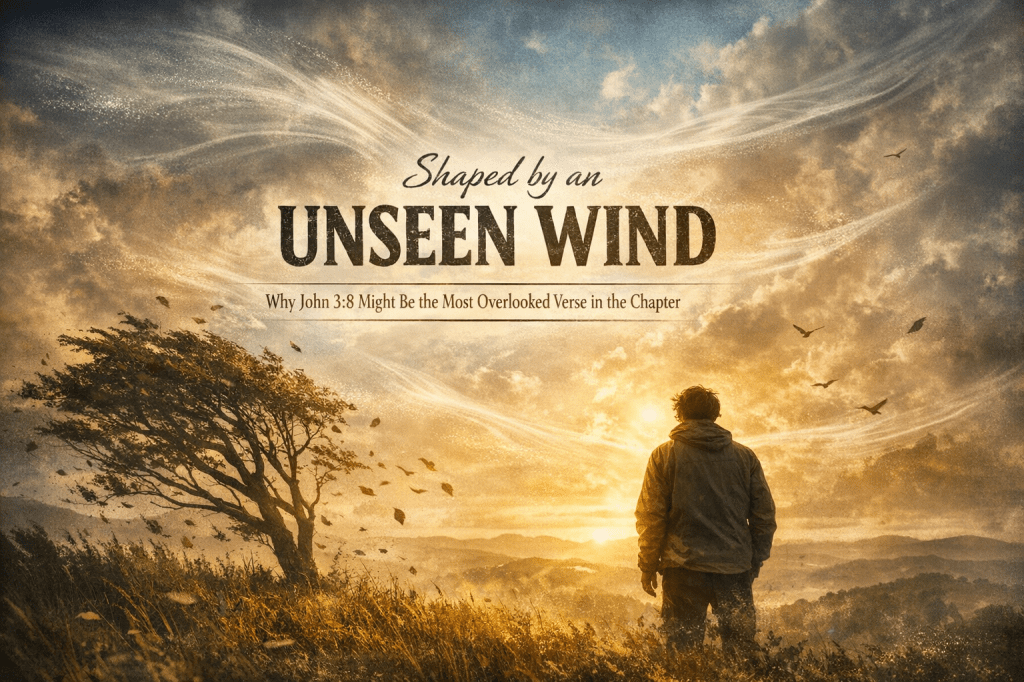
Jesus reaches for the wind—something we cannot see, cannot control, and cannot predict—to explain the work of God’s Spirit in a human life. And in doing so, He gives us a picture that is both humbling and electrifying.
Invisible Source, Visible Evidence
No one sees the wind. But we all know when it’s there.
- We see trees bending.
- We see leaves skittering across the ground.
- We see waves forming on the surface of the water.

The wind is invisible, but its effects are unmistakable.
Jesus says the Spirit works the same way. You cannot see God’s Spirit power, but you can see what it produces:
- Changed priorities
- New attitudes
- Quiet strength
- Consistent obedience
- Repentance, meekness, love, courage
The Spirit’s fingerprints show up in the contours of a transformed life.
The Old Testament Has Been Whispering This All Along
This idea—an unseen God producing visible life—runs like a thread through Scripture.
Ecclesiastes 11:5 reminds us that we do not know the way of the spirit or the work of God.
Genesis 1:2 shows the Spirit hovering over the waters, unseen yet actively shaping creation.
Genesis 2:7 and 7:22 reveal God breathing life into Adam—ruwach, the same word for breath, wind, and spirit.
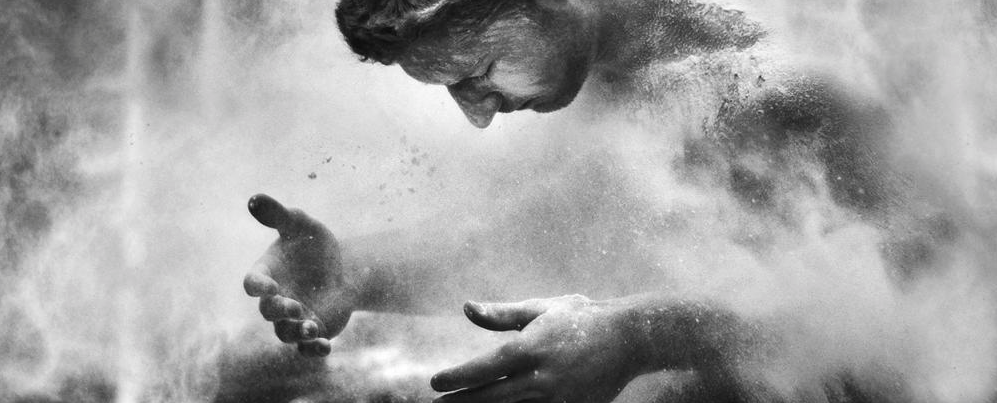
Ezekiel 37 paints the valley of dry bones coming alive only when the breath of God enters them.
Psalm 104:30 declares that when God sends forth His Spirit, creation springs into being.
Ezekiel 36:26–27 promises a new heart and a new spirit—transformation from the inside out.
The pattern is unmistakable:
God breathes, and life begins.
The New Testament Continues the Pattern
Paul picks up the theme in Romans 8, contrasting two ways of thinking:
- The mind of the flesh—visible, immediate, self‑focused
- The mind of the Spirit—invisible, future‑focused, God‑centred
A Spirit‑led life doesn’t always “make sense” to the watching world. But like the wind, its effects are undeniable.
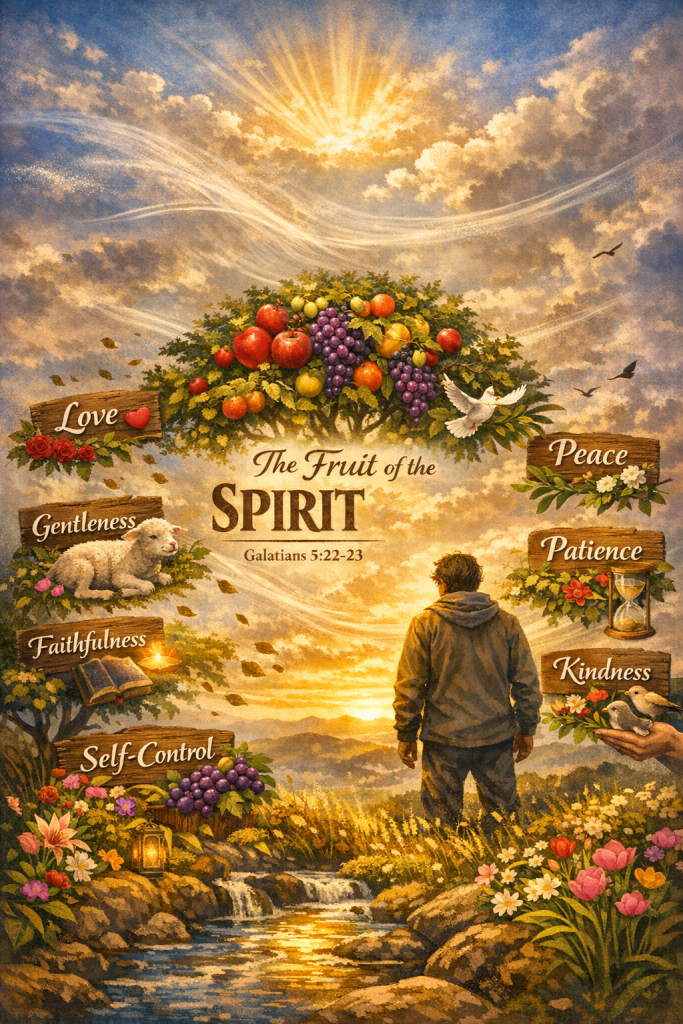
Paul’s list in Galatians 5:22–23—love, joy, peace, self‑control—are the rustling leaves of the Spirit’s presence. You don’t see the Spirit, but you see the fruit.
James echoes this in James 3:13: “Show me your faith by your works.”
Invisible reality. Visible evidence.
The Spirit’s leading is often subtle, directional, and discerned over time—like a breeze that shifts the course of a sailboat without fanfare.
Where This Becomes Real: Everyday Evidence of the Wind
John 3:8 is not abstract theology. It is the explanation for the quiet, steady, often unnoticed ways God reshapes a life.
When you choose honesty even when lying is easier…
When you walk away from gossip…
When you prioritize faith over popularity…
That’s the wind.
When you’re criticized:
The flesh wants to defend, replay, retaliate.
The Spirit nudges you to pause, reflect, and respond gently.
- No one sees the internal battle—but they feel the difference.
When you’re alone with your thoughts:
What you dwell on while walking, driving, lying in bed—this invisible world shapes the visible one.
In a marriage or close relationship:
Forgiving instead of keeping score.
Listening instead of preparing your next argument.
- The Spirit shows up not in speeches, but in tone, timing, restraint.
In integrity:
Doing the right thing when no one is watching.
Not cutting corners.
Being honest even when it costs.
- This is classic John 3:8: unseen source → visible pattern.
In work ethic:
Consistency when the boss isn’t around.
Excellence when no one will check.
- The wind is steady, not showy.
In social media:
What you post, what you like, what you refuse to engage with—your invisible motivations become very visible.
In long-term character change:
Over months and years, you become more patient, less reactive, more thoughtful.
People may not know when it started, but they notice.
In crisis:
Illness, loss, stress—these moments reveal what’s driving you.
- You can’t see the wind, but you can always see where it’s taking someone.
The Table of the Lord and the Wind
John 3 speaks of new birth.
The breaking of bread speaks of new covenant life.
The two belong together:
- The Spirit creates life (John 3, Ezekiel 37).
- The Table nourishes that life (John 6: “My flesh is true food.”)
- Both are gifts, not achievements.
The same Spirit who gives us new birth sustains us in the life Christ purchased.
The wind gives life; the bread reminds us how that life was bought.
A Final Word
You may not always feel the Spirit’s work.
You may not always understand it.
You may not always see it in the moment.
But the wind is blowing.
And if you belong to Christ and allow the Spirit to move you in quiet, steady, unmistakable ways, then it WILL transform you into a child of God – shaping you into someone new.
You will be reborn.




Leave a Reply