There are moments in life when everything shifts in an instant. A fire alarm sounds and you don’t stop to gather your things—you just move. News arrives that shakes your world and suddenly the task in front of you feels irrelevant.
Something greater has broken in, and the lesser things fall away.
John 4 gives us one of Scripture’s clearest pictures of this kind of holy interruption. We often come to this chapter to watch the Samaritan woman’s transformation—her conversation with Jesus, her backstory, her theological questions, her recognition of the Messiah. But tucked inside the narrative is a small detail with enormous meaning:
“The woman then left her waterpot…” (John 4:28)
She came to the well with a purpose. She left without finishing it. And that simple act—leaving behind the very thing she came for—becomes a window into what happens when a person truly encounters Jesus.
Because what we carry often defines us:
A student carries books.
A worker carries tools.
Most of us carry our phones—something we feel we can’t do without.
But when Jesus steps into the moment, even necessary things lose their grip.
The Samaritan Woman: Leaving the Waterpot
Her waterpot wasn’t symbolic—it was practical. Essential. Part of her daily routine. She needed it.
And yet she walked away from it.
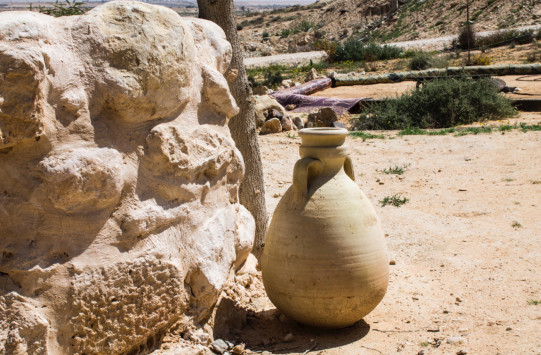
Not because it was sinful. Not because it was useless. But because she had just found something greater than her routine, her task, even her personal needs. The water she came for suddenly mattered less than the Living Water she had just discovered.
She ran to tell others. The pot stayed behind.
- When we truly see Jesus, even good things can lose their place.
Not because they are wrong—simply because they are no longer first.
Bartimaeus: Throwing Away Security
In Mark 10:50, blind Bartimaeus hears Jesus calling and immediately throws aside his garment.
That garment was his protection.
His livelihood.
His security as a beggar.
And he tosses it away without hesitation.
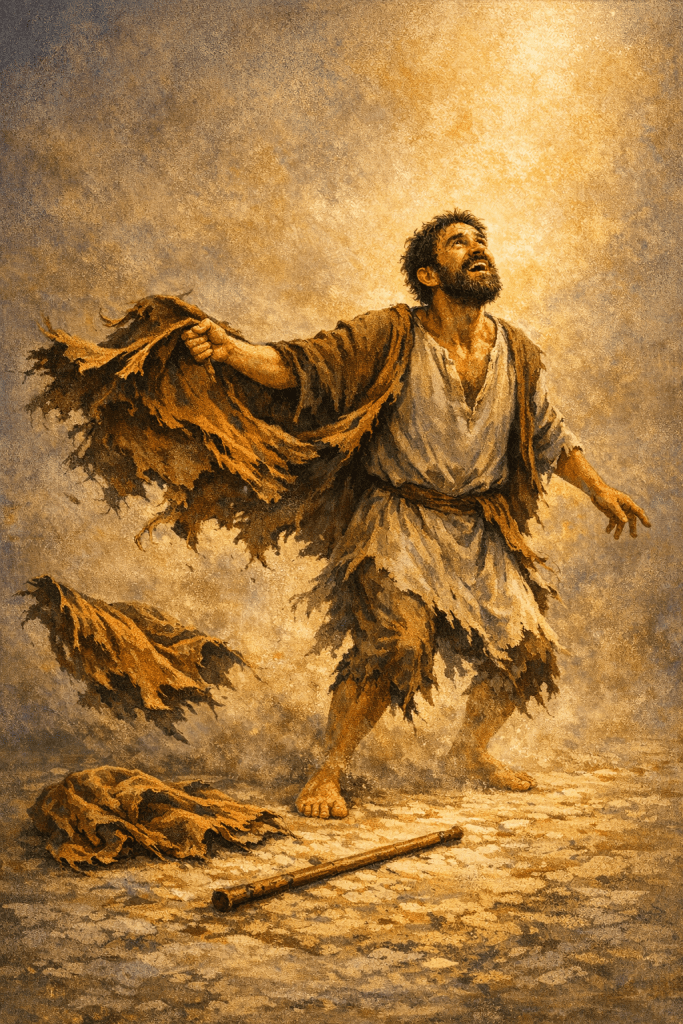
Why? Because if Jesus is calling, he won’t need it anymore.
- Faith is not only believing Jesus can change your life—it’s letting go of what you’ve depended on even before you see the final outcome.
The Disciples: Dropping Identity
When Jesus calls Peter, Andrew, James, and John (Matthew 4:20, 22), they leave behind nets, boats, and family expectations.
Fishing wasn’t a hobby. It was identity. Stability. Income. Legacy.
And they walked away from all of it.
- Following Jesus is not adding Him to your life—it is letting Him redefine it.
Matthew: Leaving Comfort and Profit
Luke 5:27–28 shows Matthew rising from his tax booth—his wealth, his status, his carefully constructed life—and walking away without negotiation.
No delay.
No conditions.
No “let me just finish this first.”
- Jesus calls people out of both sin and comfort—and the right response is total.
A Pattern Through Scripture
- Abraham leaving his homeland.
- Moses leaving the palace.
- Ruth leaving Moab.
- Esther risking her position.
- Paul leaving prestige and power.
The faithful have always been marked by what they were willing to release.
What These Stories Teach Us
1. Urgency – following without hesitation.
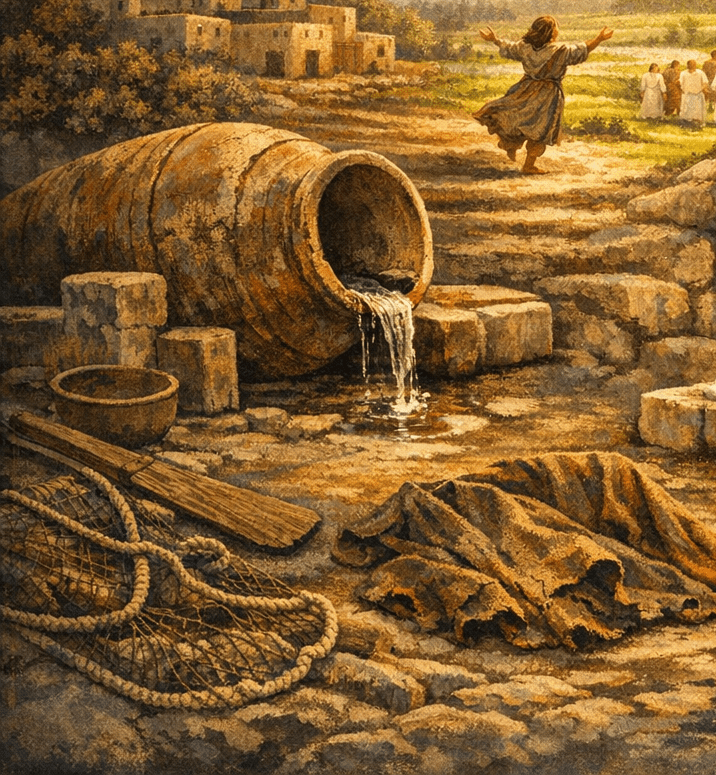
When Jesus calls, delaying feels wrong.
Waterpots are forgotten.
Cloaks are thrown aside.
Nets hit the ground.
2. Reordered Priorities – what is truly important becomes apparent.
Meeting Jesus doesn’t simply add something new to life—it reshapes life entirely.
3. Letting Go Reveals Faith – what we release shows what we trust.
You cannot cling tightly to everything else and still follow Him freely.
4. Joyful Abandonment – it’s not really losing; it’s gaining something infinitely better.
These people didn’t walk away reluctantly.
They ran.
They followed.
They rejoiced.
What We Carry Today
We may not carry waterpots or cloaks or fishing nets, but we carry things just as real:
- Our pride.
- Our habits.
- Our comforts.
- Our plans.
- Our sense of control.
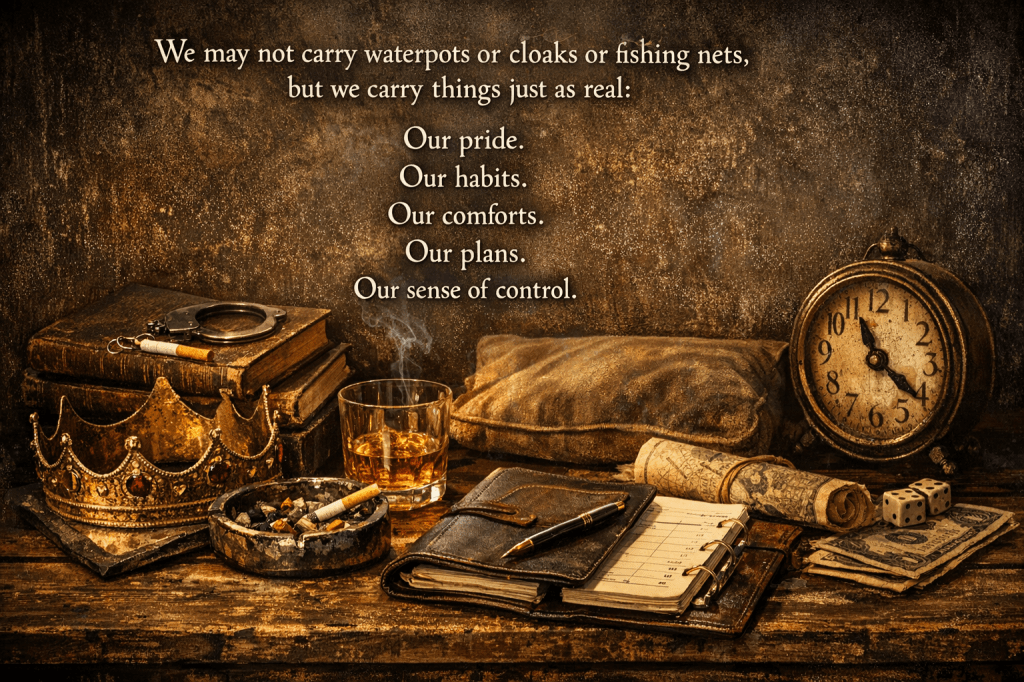
Often, it’s not only the sinful things that hold us back—sometimes it’s the ordinary things. The legitimate things.
The things that have a place, but must not be in first place.
The real question is not, “What is wrong in my life?”
but “What am I unwilling to put down for Christ?”
The Emblems Call Us to the Same Surrender
When we gather around the bread and the cup, we remember a life in which nothing was held back.
Jesus did not cling to His own will.
He did not seek His own comfort.
He did not preserve His own life.
The bread speaks of a body given.
The cup speaks of a life poured out.
And together they speak a quiet but unmistakable invitation: “Follow Me.”
Not just in word.
But in surrender.
In willingness.
In letting go.
And Here Is the Deeper Layer: What We Leave Behind Points to What We Will Become
The woman’s waterpot was an earthen vessel—fragile, ordinary, temporary.
Scripture says we are the same: “We have this treasure in earthen vessels…” (2 Corinthians 4:7)
Her abandoned pot becomes a picture of our mortal bodies—our jars of clay—that will one day be set aside when Christ returns and we are clothed with immortality.
Bartimaeus’ garment was the symbol of his old life—his limitations, his identity in the flesh.
And when he cast it away, it foreshadowed what every disciple must do: “Put off… the old man.”
(Ephesians 4:22)
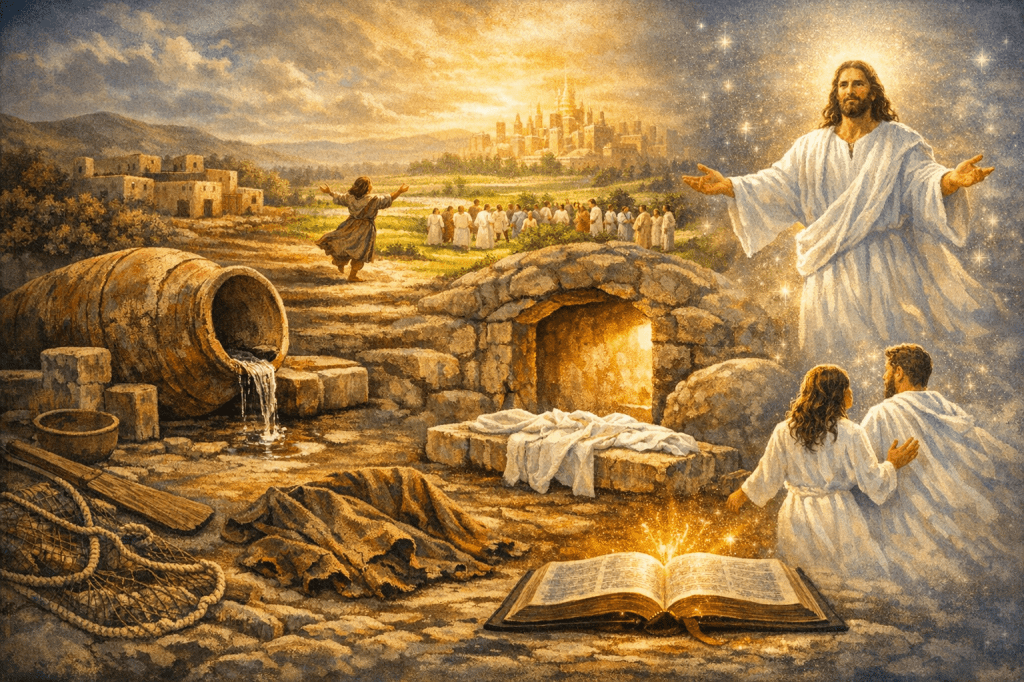
Even Jesus left His grave clothes behind in the tomb (John 20:5–7).
The old garments of mortality stayed in the darkness.
He rose clothed in immortality and glory.
Scripture promises the same for us: “This mortal must put on immortality.” (1 Corinthians 15:53)
“We shall be changed.” (1 Corinthians 15:51)
“We groan, longing to be clothed upon with our house from heaven.” (2 Corinthians 5:2–4)
But that future transformation belongs to those who seek it now: “To them who by patient continuance in well doing seek for glory and honour and immortality…” (Romans 2:7)
We seek immortality now—in jars of clay, with garments still stained by sin and weakness—so that when Christ appears, He will finish the work and clothe us with His glory – vessels fit for His use!
A Final Question for the Heart
As we remember Him, the question comes to each of us personally:
What do I need to leave behind—today—to follow Him more fully?
- The Samaritan woman left her waterpot and found purpose.
- Bartimaeus left his garment and received sight.
- The disciples left their nets and gained a calling.
And now Jesus calls us.
- Leave behind the waterpot—your earthly priorities.
- Leave behind the garment—your old identity in the flesh.
- Leave behind the nets—your self‑made security.
Because the One who calls you is preparing to change you.
- He will take your jar of clay and make it shine like the stars.
- He will replace your worn garment with robes of righteousness.
- He will make you a fisher of men.
What will you leave behind today so that you may be ready and prepared for that day?





Leave a Reply